Is so-called sustainability more important than growth?

Last week before Irene burst onto the scene I read an interesting article by Ann Miller, a Baltimore Examiner.

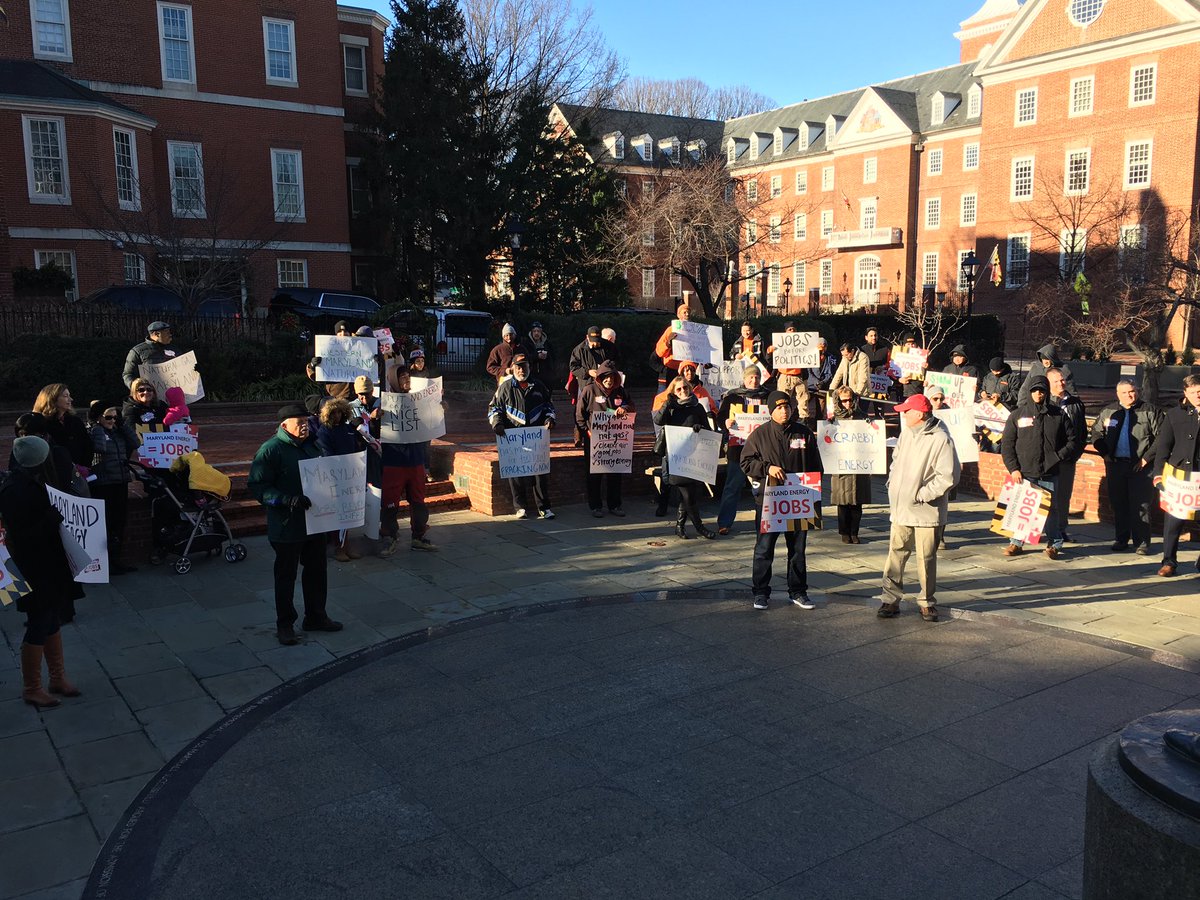
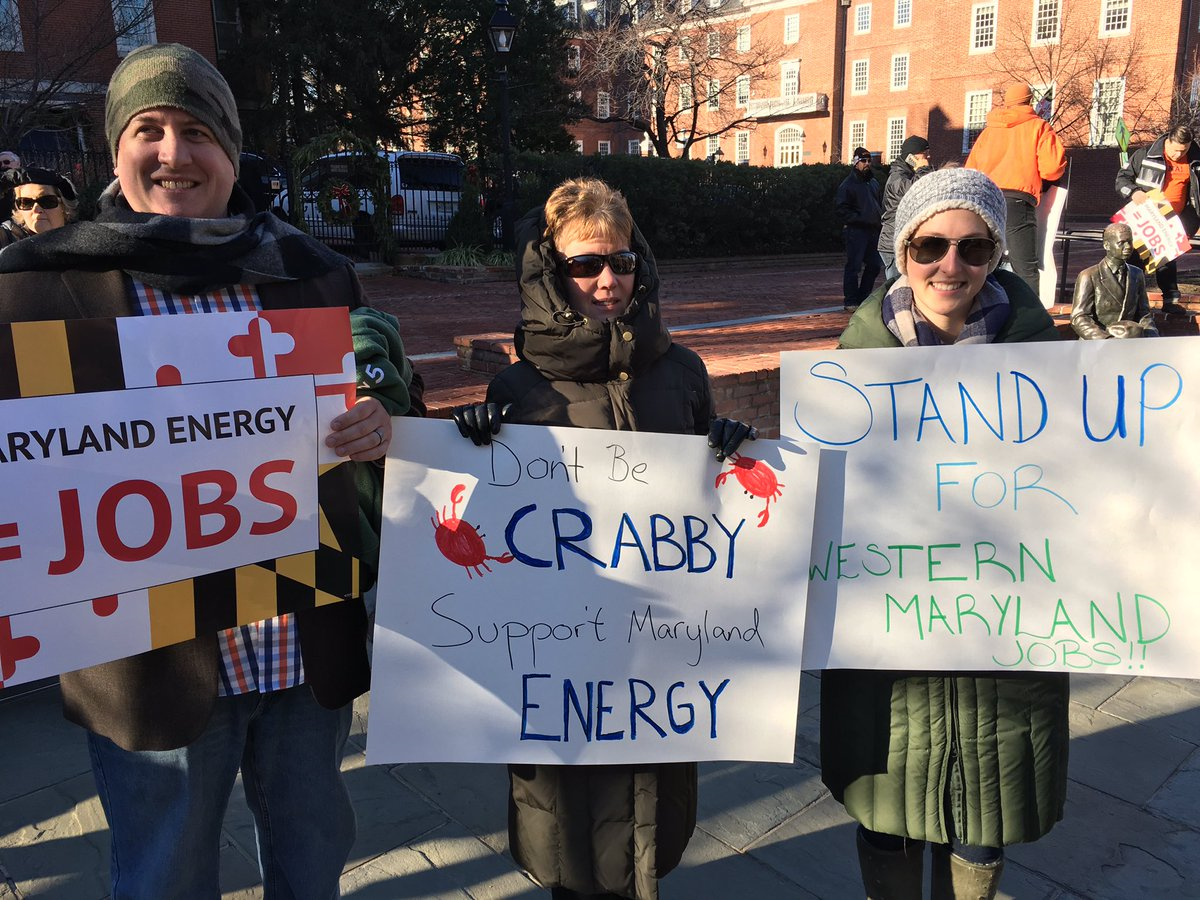
Apparently the folks in Carroll County have regained a dose of common sense and are trying to apply the brakes to the steamroller called Plan Maryland. Obviously this is a cause which Wicomico County should sign up for as well, given how much the state has attempted to bully local governments into giving up control in the recent past. As we have seen in its dealings with the poultry industry, Annapolis (and by extension, Washington) does not know best.

After all, the goals of Plan Maryland are:

…centered on growth, preservation and sustainability. The “growth” goal is to concentrate development and redevelopment in towns, cities and rural centers where there is existing and planned infrastructure. The “preservation” goal is to preserve and protect environmentally sensitive and rural lands and resources from the impacts of development. And the “sustainability” goal is to ensure a desirable quality of life in our communities and rural areas while preserving the significant natural and cultural resources that define Maryland.

Given that goal, one could reasonably ascertain that the “war on rural Maryland” is far from over. Just because Governor O’Malley didn’t get his initiative of banning septic systems for large developments through the General Assembly doesn’t mean he won’t try an end run like this document, which notes:

With Smart Growth, many thousand fewer septic systems would be installed since the same number of households would connect to community systems with far better treatment, preventing tons of nitrogen discharge into Maryland’s waters.

(snip)

Smart Growth limits additional wastewater and stormwater pollution by reducing the addition of septic tanks, limiting the amount of forest and wetlands removed for new development, encouraging smaller lawns, and preventing impervious surfaces.

Of course, they forget to mention that what growth does occur becomes much more expensive.

And what the state can’t get through legislation they get through regulation. They already would like to get us out of our cars:

Land use decisions at the local level and housing policy programs need to more effectively consider infrastructure capacity and need to manage demand for travel, to make decisions that will be financially wiser for Marylanders. Moreover, a smarter linkage between where we grow and how we get around has the potential to reduce greenhouse gases, cut air pollution, support the creation of more compact communities, and provide Marylanders with more options on how they move from place to place.

So don’t be looking for that wider road anytime soon – they’ll spend the money on a bus route no one rides.

And that’s the problem – I don’t believe that a one-size-fits-all solution dictated from on high like Plan Maryland is necessarily going to work in the best interests of our area. Read more

Share

Three days to act

This came to me from the folks at Americans for Prosperity. Seems the Environmental Protection Agency wants to become the Property Control Agency:

Legislation that would have deleted the word “navigable” from the federal Clean Water Act and given the EPA and Army Corps of Engineers jurisdiction over every drop of moisture in the country crashed and burned last Congress, ending the 36-year congressional career of its lead sponsor, Jim Oberstar, in the process.

But Obama’s EPA, as usual, won’t take no for an answer, and is now attempting to ignore two Supreme Court decisions, common sense, and the American people and vastly expand federal Clean Water Act jurisdiction via a guidance document.  A bipartisan group of 170 members of Congress told them not to, but they are doing it anyway.

If the EPA and Army Corps succeed, they can exercise effective control over all land and water in the United States.  The green groups are fired up and pouring comments into the docket supporting this outrageous power grab, and we need to fight back.

Click here to tell the EPA and the Army Corps to STOP their back door assault on private property rights.

The docket closes on July 31st, so there is no time to spare. Please take action today!

So I did, and this takes you to a prefilled form letter you can use, or substitute your own comments. I chose the latter, to wit:

To the Environmental Protection Agency and the Department of the Army, Corps of Engineers

[EPA-HQ-OW-2011-0409; FRL-9300-6]:

Regarding: EPA and Army Corps of Engineers Guidance Federal Register published Guidance Regarding Identification of Waters Protected by the Clean Water Act (CWA).

When non-navigable waters become fair game for government intrusion into our private property rights, that’s a bridge too far. In theory, the flooding in one’s basement caused by heavy rain couldn’t be fixed if the EPA put their mind to it.

Personally, I prefer to have a solid, waterproof foundation and if there’s puddles in my yard I’d rather let nature take its course.

You may read my comments and see them as ridiculous. “We’re never going to take these regulations to that degree,” you surely argue. But through overenforcement of existing laws like the Clean Water Act and Antiquities Act, the federal government has already robbed many of their livelihood and locked away resources which could be useful to our society’s well-being.

I urge you to reconsider your purpose, and focus on real threats rather than a phantom global climate agenda.

Sure, you may end up on AFP’s e-mail list but that isn’t all bad. I shudder to think what bilge has been sent in by the radical green element which has already been active in supporting this power grab.

It’s the same people who would like to eliminate septic systems in large developments, created ever-wider buffer zones for development in certain areas, or mandated that we have the same, more expensive blend of gasoline that urban areas use. They have theirs but would love to deny us “hicks in the sticks” a chance to create our own growth and progress. If it were up to them, we’d all be living cheek-to-jowl in crowded urban areas while leaving vast swaths of territory for Mother Nature to control. (Of course, being the enlightened ones, THEY can have access but we peons can’t.)

So take a few minutes to counter the Radical Green agenda, whether through your own thoughts or using theirs. Maybe they won’t listen, but others will get the message and act accordingly.

Share

Coming around

In news that’s sure to cheer my API friend Jane Van Ryan up, and perhaps build even more clamor for the Keystone XL Pipeline (and thousands of jobs) being debated by the State Department and EPA, Rasmussen released a poll yesterday which states 75 percent of Americans feel we’re not doing enough to develop our own gas and oil resources.

While the Keystone example would promote exploration in both the U.S. and Canada (hence the State Department involvement,) there are plenty of places we can explore and extract in America, both on- and offshore. An April Rasmussen survey found 50% support for drilling in ANWR  (they didn’t ask me, so now it’s a majority of 50 percent plus one;) meanwhile, another April survey pegged support for deepwater drilling in the Gulf of Mexico at 59 percent. That’s in the wake of sob stories about the one-year anniversary of the Deepwater Horizon disaster.

Yet we still have people in the corridors of power who think mandating more fuel-efficient cars is the way to go. I say let the market decide on that one; of course, given this administration’s policy decisions which have led the way to $4 a gallon gasoline they may all but kill SUV demand anyway.

It never ceases to amaze me that the people who believe that certain technologies, created over the last century and constantly updated and perfected to make them even more cost-effective, are a horrible blight upon the earth. And then they turn around and support the methods those tried-and-true approaches supplanted – the sun only shines an average of 12 hours a day and is at a usable angle only a percentage of that time (not to mention the need for cloud-free days) while the wind has to blow just so to make a wind turbine useful.

About the only fossil fuel I’m aware of that, by reputation, is dogged by reliability issues is nuclear power. If we were getting our own supplies of oil, coal, and natural gas we wouldn’t have to worry nearly as much about strife in other parts of the world or bad weather in a particular region of the country. Are some people too dense to figure this simple truth out?

Now I don’t mind at all if the private sector is involved with alternative energy – after all, Perdue is placing about 13 acres’ worth of solar panels behind its Salisbury headquarters, paid for by a utility – but I have to question whether the utility really wants this electricity or is being forced to back this project by government mandate. If, because of the energy savings Perdue might enjoy, we save a nickel on a fryer that’s great; but the question is whether we lose that few pennies paying for mandated “renewable” energy from utilities when it’s far cheaper to create electricity from coal or natural gas.

(I just hope the glare from the panels doesn’t cause any more accidents in a busy area where changing lanes to follow U.S. 50 westbound is frequent.)

We know that someday there will come a time when fossil fuels run out and technology allows renewable energy to be more reliable. But we’re several generations away from that point, considering how much oil is in shale out west and natural gas is under the rocky western end of our fair state. Let’s go out and get it while we can, creating good jobs in the process.

America has a prosperous lifestyle to sustain, whether environmentalist wackos like it or not.

Share

Odds and ends number 31

Once again I have a lot of little items that deserve a little bit of comment, so here goes.

Delegate Pat McDonough is at it again. The 2012 Congressional candidate has prefiled a bill called the Toll Fairness Act. It has three goals:

  • Declare a moratorium on all toll increases.
  • Mandate a General Assembly vote and Governor’s signature on all toll increases, for accountability.
  • Prohibit transfers to non-transportation accounts. Delegate McDonough claims almost $800 million has been “stolen” from transportation accounts over the last eight years.

While it’s doubtful such a bill will muster the votes to get out of the Democratic-controlled committee it will be assigned to, the fact that we have this measure prefiled shows that people can be good and angry about the situation. We will see on July 14, when a hearing on the toll increases will be held in Ocean City.

Speaking of the peoples’ voice, the petition drive to overturn SB167 through referendum may well be successful. But CASA de Maryland was granted a request to make copies of the petitions; a move Delegate Michael Smigiel of the Upper Shore found shocking.

Delegate Smigiel made a point which I wanted to amplify. It’s bad enough that a group who’s dead-set against the referendum will be allowed to take possession of these petitions, if only for a brief time. Luckily the potential for mischief is lessened since that cat was let out of the bag.

But I think back to the controversy over Proposition 8 in California (to overturn same-sex marriage) and what happened to those who contributed to that effort financially – a number of them were harassed by pro-gay marriage supporters, with threats to both boycott their businesses and harm them physically. Could pro-illegal groups and supporters use the petition information to do the same in Maryland? They’re playing for keeps; unfortunately for them a goodly number of people about these parts are armed and don’t much like harassment. Hopefully the folks at the ACLU and CASA de Maryland will keep this in mind.

Meanwhile, those who support the petition and wish to make sure the count is done fairly aren’t allowed into the process. A Board of Elections worth its salt would tell the state to go pound sand on that (since it’s simply a policy memorandum and not law.)

And that’s not all from the state of Maryland. Richard Falknor at Blue Ridge Forum discusses the new “green” graduation requirement. There’s no time for teaching critical thinking or even the three R’s, but they have time to push that “smart growth” bullshit on our kids? Since the requirement appears to be only in public schools (for now) I guess I don’t have to deprogram my girlfriend’s daughter – yet – since she attends a private school.

I also learned a new word regarding this new environmentalism. In a press release from the Competitive Enterprise Institute announcing the formation of the Resourceful Earth website, a quote from Myron Ebell, the Director of CEI’s Center for Energy and Environment, caught my eye. Said Ebell, “unfortunately, many major corporations are being greenmailed into supporting these assaults on jobs and prosperity.” ‘Greenmailed,’ indeed. Do you think oil companies really want to spend millions to deal with environmental groups advocating for polar bears or caribou rather than job creation and maintaining our lifestyle? They probably add a nickel per gallon to the price.

Still, pump prices have been on the decline of late. That fact makes the timing of the decision to draw 30 million barrels down from our Strategic Petroleum Reserve very curious. Granted, there will still be nearly 700 million barrels remaining in our coffers, but there was no emergency situation to merit the release. Strife in Libya is no worse than unrest in Nigeria, another major oil-producing nation, back in 2009.

Reaction has been severe from some quarters, and seems to be the correct perception of the situation. Americans for Limited Government, for example, claims savings will be meager and short-lived:

If one is generous and assumes yesterday’s $4 drop was solely because of Obama and International Energy Agency, at best it will save consumers $.10 a gallon for gasoline.  That works out to about $1.50 per fill up, or $6 for the month the additional gasoline is available.

In other words, Obama has jeopardized national security by drawing down the strategic reserves to, at best, save consumers about $1.50 per fill up when this ‘flood’ of new gasoline hits the market.  To call this irresponsible would be an understatement.

And the real experts at the American Petroleum Institute were equally underwhelmed:

The release makes little sense for American markets. Crude and gasoline inventories are above average, and crude and gasoline prices have been trending down for weeks, despite the loss of Libyan oil, which markets have already adjusted to. The SPR was intended to be used for supply emergencies. There is no supply emergency. We don’t know what impacts this might have on markets long term. But we could and should be taking steps that would increase our own production by 2 million barrels a day or more for decades, which is possible if the government would grant much greater access to America’s ample oil and natural gas reserves. This would do vastly more to help consumers, increase energy security, create jobs and deliver more revenue to our government. It’s action that would truly strengthen our energy future, not a temporary gesture that has no lasting benefits.

30 million barrels is about what our nation consumes in a day-and-a-half. 60 million barrels (the total IEA release) is well under what the world consumes in a day.

Here’s the problem I see with this release. We have a President who doesn’t mind $4 per gallon gasoline, as long as the increase is relatively steady. He also has backtracked from allowing additional oil exploration thanks to a rare but ill-timed drilling accident in the Gulf of Mexico.

If you assume the oil which was placed in the SPR was purchased at a relatively low market price, well, we have to make that up sometime. And if you believe their line about supplies tightening up thanks to a civil war in Libya it would be my guess that oil will be more expensive. We just added 60 million barrels to future worldwide demand, and that will likely drive prices up a little bit.

In short, this is a shell game (no pun intended) to make people believe we’re doing something about a problem better solved with more oil extraction. For example, approving one pipeline would eventually make up for about half of what the world normally gets from Libya on a daily basis. Needless to say, I don’t buy the ‘peak oil’ theory. (Thanks to Jane Van Ryan of API for the pipeline info.)

And one final item. Over the last few weeks I had a PSA for the Move America Forward Troopathon which was broadcast over the internet last Thursday. They now have their tally in and were pleased to report they raised $507,843 from their efforts – exceeding their $500,000 goal.

It wasn’t as much as previous Troopathons raised, but then again we have fewer troops in that theater. Considering that being pro-military isn’t as much in vogue as it used to be I think that total is pretty good and reflects a nation that remains in a giving mood for our men in uniform.

Wow, that did a nice job of cleaning out my e-mail box. Look for more interesting stuff to come.

Share

Speak now or forever pay more

Now through August 1, concerned Maryland citizens can have their say on the proposed toll increases for the Bay Bridge and other Maryland toll roads and bridges via a web form at www.mdta.maryland.gov or by writing to MDTA Toll Comments, 2310 Broening Highway, Baltimore, MD 21224. There will also be a series of public hearings beginning June 9:

  • June 9 (Montgomery County)
  • June 13 (Baltimore City)
  • June 14 (Prince George’s County)
  • June 15 (Queen Anne’s County)
  • June 16 (Cecil County)
  • June 20 (Anne Arundel County)
  • June 21 (Baltimore County)
  • June 22 (Charles County)
  • June 27 (Harford County)

Obviously they’re not soliciting the input of the Lower Eastern Shore, so the best route may be to send a comment directly to MDTA.

They defend the toll increase as necessary:

Two key forces are driving the proposal — paying for major construction work needed to keep these large, aging and expensive facilities both safe and operational and paying for additional highway capacity now under construction in the Baltimore and Washington regions.  MDTA’s tunnels, bridges and turnpikes are financially supported through tolls and not the State’s Transportation Trust Fund or General Fund. The additional revenue is needed to meet the current and future needs of these facilities.  The plan allows Maryland to offer some of the most generous commuter discounts in the country and keeps overall toll rates comparable with those elsewhere in the region.

(snip)

Toll revenues fund safety, rehabilitation, customer-service and improvement projects Statewide, including $132 million in repairs for the Thomas J. Hatem Memorial Bridge (US 40); $121 million in work for the John F. Kennedy Memorial Highway (I-95); $225 million in repairs to the William Preston Lane Jr. Memorial (Bay) Bridge (US 50/301); $410 million in work for the three Baltimore Harbor crossings – the Fort McHenry (I-95, I-395) and Baltimore Harbor (I-895) tunnels and the Francis Scott Key Bridge (I-695); and $21 million in repairs to the Governor Harry W. Nice Memorial Bridge (US 301).  In addition, the MDTA is constructing two major projects to address traffic congestion in Maryland.  They include the Express Toll Lanes along I-95 in the Baltimore region and the Intercounty Connector in the Washington region.

It has been years, decades in some cases, since the MDTA raised many of its toll rates.  The Bay Bridge toll rate for passenger vehicles is lower now than when the original span opened in 1952, when drivers of passenger cars paid $2.80 round trip, plus $.25 per passenger.  Toll rates for passenger vehicles were last raised in 2003 at the Baltimore toll facilities, the Kennedy Highway and the Hatem Bridge and in 2001 at the Nice Bridge. Commuter toll rates were last raised in 1985 for Baltimore toll facilities and in 1983 for the Bay and Nice bridges. Toll rates for vehicles with three or more axles were last raised at all facilities in 2009.

The funds to finance, operate, preserve, maintain, improve and protect Maryland’s eight toll facilities come directly from the tolls that customers pay.  The MDTA combines toll revenue from all facilities to pay operating costs and the debt on bonds that are issued to fund major projects.  Revenue “pooling” makes the MDTA financially strong with top bond ratings that reduce borrowing costs.

It’s understandable that repairs need to be made on aging infrastructure, but the increases seem rather excessive to those of us on the Eastern Shore when we’re not getting any of the new work. Why not leave the tolls alone on the Bay Bridge (or perhaps enact a modest increase, maybe $1 total phased in over the two years) but ramp up tolls in the areas receiving the work? It’s worth mentioning the the Inter-County Connector between Montgomery and Prince George’s counties is exempt from the toll increases, yet much of the money extracted from other areas will go to finish that. Since Baltimore is getting the new express lanes, they can pay for that work with tolls increasing at a more modest pace.

In truth, the one thing which seems to upset people the most isn’t necessarily the rate hikes, but their scale. Just because tolls haven’t been raised in x number of years is no excuse to make it up all at once, but that’s what they wish to do. Others fret that the money will simply disappear into that giant black hole known as the state’s General Fund instead of funding the needed improvements. It’s not like we have a governor who would do such a thing, you know.

These fears are justified, particularly when this is couched as a continuation of the “War on the Shore.” Adding $20 or more per week to an Eastern Shore commuter’s toll is $1,000 per year less they can spend supporting local businesses. And don’t believe for a minute that those who oppose urban sprawl don’t support this move – it retards development on this side of the bridge and encourages mass transit. If a lane is ever added to the Bay Bridge, I can all but guarantee it will be one of those multi-passenger express lanes instead of one just anyone could use.

Make sure to make your voice heard!


Share

Christie appears courageous while O’Malley is oblivious

I wouldn’t have expected New Jersey to take the lead on this, but under Chris Christie’s leadership they’re renouncing their membership in the Regional Greenhouse Gas Initiative – this according to Tim Wheeler at a Baltimore Sun blog. I hope this is the start of a trend, with Pennsylvania, New Hampshire, and Maine racing to see who’s next to pull out of an organization which is unecessarily increasing electric rates in the name of combatting so-called global warming.

It’s interesting as well how Wheeler couches the $162 million Maryland has “raised” (read: extorted out of utility companies and job creators) from the series of auctions held over the last couple years. In truth, our state has helped to create yet another vast wealth redistribution scheme, with dollars flowing from “rich” companies to poor home occupants who need help paying their bills, which are increasing thanks to the state’s mandate. These increases aren’t helping the utilities’ bottom lines.

Yet before I praise Governor Christie for his decision to withdraw, it’s clear that he only believes the organization is “a failure” because his state has passed laws which more directly address the issue. Unfortunately he’s still swilling from the green Kool-Aid, and those who believe he could be the savior of the Republican Party’s 2012 chances had better know where he stands on this issue – it looks pretty well left of center to me.

Certainly Maryland can claim a similar set of regulations in addition to the RGGI statutes, but Governor O’Malley still believes that combatting so-called manmade global warming is “a fight for our children’s future.” At the rate Martin’s driving jobs out of Maryland, our childrens’ future will be spent in states like Texas, Virginia, or Florida anyway.

Besides, any decrease in carbon emissions may well be traced to the economic slowdown rather than any impact RGGI has created. There was a reason cap-and-trade died in Congress last year, and it was because the issue was properly couched as a job-killer and wealth redistribution scheme designed to favor particular “green” businesses at the expense of more tradtional, proven energy sources like coal, oil, and natural gas.

And notice what Christie has to say about coal in New Jersey: “(f)rom this day forward any plans that anyone has regarding any type of coal-based generation of energy in New Jersey is over.” Never mind that coal’s cheap, effective, and with proper management not all that polluting - Governor Christie is foolishly taking it off the table in order to be a “leader” in unreliable wind and solar energy. Perhaps there’s more hot air eminating out of Trenton than Annapolis, but the results of wind and solar power for New Jersey will likely be similar to those in Maryland.

In essence, those who are skeptics like me welcome Christie’s decision to pull out of RGGI but believe his reasoning is flawed. For us to expose these hucksters covering a wealth-redistribution scheme in green fig leaves, we need more bold leadership than Christie is exhibiting here.

And while O’Malley is critical of Christie, but for reasons way off base. The proper move is to scrap the mandates along with the membership, and hopefully some other state will lead the way on debunking the cap-and-trade scam once and for all.

Feelgood legislation is one thing, but securing a real, solid-paying job really makes one feel good. Stop listening to the scammers and start reverting to common sense.

Update: Isn’t it interesting how this AP story by Dina Cappiello highlights Christie as a 2012 GOP Presidential example, even though he’s not in the race? Yet it doesn’t bring up the points I make about the remainder of his comments last week and how environmentally friendly they were – must not be in the template.

Share

ICYMI: a ‘radio days’ update

I’m sure not all that many of you caught my recent interview with Thom Hartmann regarding my last PJM piece. I knew they wanted me on Skype for a reason, but I was catching up on my Twitter mentions and it linked to this video. Enjoy me in living color, recorded as I was crammed up against my bookcase.

I have to say either my webcam or Skype makes me look 10 pounds heavier, though. (Yes, that’s a joke – I could stand to lose a few pounds.) But the video has 19 likes and no dislikes, plus the comments are almost uniformly either in my favor or constructive criticism of my point (as opposed to personal attacks.) It is sort of disconcerting seeing me larger than life on a video monitor, but I could get used to it.

More on the MDGOP convention later today – it’s already drawn some interesting comments.

Share

Trying to bag the bag tax

I get the most interesting e-mail sometimes, and it helps to give me ideas for topics to write about in situations like this where my other commitments keep me from writing more lengthy, in-depth articles like the Harris townhall story now set for tomorrow.

About a week ago I received an e-mail from Claudia Holwill, who works for Edelman, a communications firm in Washington, D.C. I have a nodding familiarity with them because the good folks at API also apparently use them – most items from my friend Jane Van Ryan are also copied to a different Edelman employee. Holwill wrote me because, in part, her company must follow my website or at least is familiar with the group of sites covering Maryland politics:

I am writing because I saw your recent post about continuing efforts to raise taxes in Maryland, and wanted to reach out regarding the proposed legislation to tax plastic bags that you mentioned, and to see if you would be interested in meeting with an executive from Hilex in DC next week. 

Sadly, my previous commitments this week precluded me from that meeting, but it’s understandable that Hilex Poly, the company in question here, would be very interested in the prospect of a tax given that they are a plastic bag producer. And it’s no different than any of the several sources who pitch story ideas, meetings, conference calls, etc. to me given my position as a somewhat influential political blogger who can give them free pixels. And, of course, I don’t like tax increases any more than the next guy.

But there’s something else in the mix here as well. Think back to the days before you had the choice of “paper or plastic.”

Paper bags have a number of inherent weaknesses: they can tear easily, don’t stand up well to water or grease, and aren’t that convenient to carry. Obviously someone saw the opportunity to create a better bag and plastic bags are now the norm because they addressed these issues and more. Of course, they’re not environmentally correct because they’re not biodegradable like paper is, so the environmentalist wackos want to tax plastic bags and encourage the use of cloth bags. (But you have to carry them through the store to do your shopping. Wouldn’t that promote shoplifting?)

Bag makers play up their recycling angle. Another item Holwill sent me was this from Advance Polybag:

Advance Polybag, Inc., an Elkridge manufacturer of plastic bags, could see its jobs threatened if state lawmakers pass a five cent tax on grocery bags this legislative session. Passage of the bill would affect 140 people and their families.

Today, Rex Varn, Executive Vice President of Advance Polybag, released the following statement:

“We’re speaking out on this issue because we have an obligation to defend the 140 people who work at our plant in Elkridge and the numerous local businesses that support our operation. The bill the Maryland Legislature is considering will put these jobs at risk.

It will tax people at a time when the state is already struggling with 220,000 unemployed. No other state has implemented such a policy, and in fact, states that have tried, have rejected such proposals – instead opting to promote recycling efforts – a more effective solution to litter.

We are interested in having a productive dialogue to find more common sense solutions. Instead of a tax, we support promoting bag recycling – an approach that creates jobs and preserves consumer freedom and convenience. Many do not realize that plastic bags are safe, clean and 100 percent recyclable. They are made from natural gas, not oil; nine out of ten bags are re-used by consumers; and, when recycled, they create new materials.

We are committed to continuing our efforts to ensure that, as an industry, we provide the safest, most energy-efficient alternative at checkout.”

One thing Advance also pointed out is that the tax would create “a 500 percent levy on the good,” all for about $2 million in revenue over the next five years. They may call it the “Clean the Streams and Beautify the Bay Act of 2011″ but it’s not about the Bay – it’s about the Benjamins.

Is it possible to have a useful product anymore without some do-gooder trying to get rid of it, tax it to death, or both? Let’s hope the plastic bag tax meets the same fate last year’s attempt does.

Share

Input on Bay input

And we’re not talking the pretty input of a mountain brook, either – it’s more like overflow from a clogged commode.

This is something I didn’t know about Jim Pelura; he has a little more than a layman’s grasp of the controversy behind septic systems here in Maryland. Let’s just say that there’s a far greater cause of Chesapeake Bay pollution not being addressed.

Pelura wrote in an e-mail to me:

The pending legislation centered around septic tanks is another example of Annapolis putting emotions ahead of science in lawmaking.

To listen to Governor O’Malley and his supporters in the Maryland General Assembly, one would think that septic tanks are the major contributor to Bay pollution.  They have consistently ignored actual data from the Maryland Department of the Environment concerning the cause of over-nutrification (pollution) of the Chesapeake Bay.

In 2005, as a Trustee of the Maryland Agricultural Land Preservation Foundation, I explained in a letter to Ms. Kim Coble of the Chesapeake Bay Foundation that,  according to the Maryland Department of the Environment, close to 700 million gallons of raw or minimally treated sewage was dumped into Maryland waterways in 2004 and over 400 million gallons in 2005.  I also indicated in that letter that the Maryland Department of the Environment has been aware of this situation, and in 1995 cautioned that antiquated and poorly maintained sewage treatment plants were a major cause of Bay pollution.

While the situation is improving, unfortunately this trend continues to today, with sewage treatment facility malfunctions being the major source of pollution to the Bay.  

The recent numbers for sewage spills due to malfunctioning treatment plants are: 20 million gallons in 2008, 98 million gallons in 2009, and 97 million gallons in 2010.

According to the Patuxent Riverkeeper, the Dorsey Run Waste Water Treatment Plant in Anne Arundel County (just one example) had 24 violations between 2005 and 2010.  Records show that, between July 2003 and June 2009, problems at this facility and in the sewer pipes leading to it caused sewage spills totaling about 2.2 million gallons of raw sewage.  A further 11 million gallons of partially treated sewage were discharged when the plant failed in October 2007.  According to the Riverkeeper, “there are a potpourri of buggy, outmoded and troubled industrial facilities and wastewater plants that exist by virtue of state-issued permits that are regularly violated and that the State rarely enforces.”

It is up to all of us to insure that our waterways are kept clean and free of contaminants, including sewage. 

We can do this by insisting that our elected officials from both parties promote legislation based in fact and on science instead of popular opinion.

Blaming those folks with septic tanks is not only wrong but indefensible. (Emphasis in original.)

Yet what is the solution the state desires? Hooking future developments up to new or existing sewage treatment plants!

We have a situation in Salisbury where the wastewater treatment plant still isn’t performing properly, even with expensive upgrades that local ratepayers remain on the hook for. Obviously adding to the problem by hooking up even more homes and businesses isn’t going to help fix the problem, so apparently the solution is to not have new development at all. (Sorry, biology won’t permit us to address the root cause. We all have to eat.)

There are times I suspect that the true aim of these radical greenies is to depopulate large rural areas of the state so the creatures of precious Gaia can move about freely, and eliminating the prospect for development can accomplish that goal through attrition. Imagine the economic chaos which would ensue here if Perdue moved away – aside from the area immediately around the university, Salisbury could well look like Detroit if that were to occur. They couch it as ‘farmland preservation’ but in driving around the area I see a lot of rural places where crops aren’t grown – it’s either stands of forest or wetlands.

To those people who fear our area looking like MoCo or the Baltimore suburbs, I assure you we have a LONG way to go before we even come close to that density. It ain’t happening in my lifetime.

So Pelura’s right: before we start taking development rights away from our area of the state as well as rural areas around the bigger cities, perhaps the state should address the problems with the system in place. Adding development and jobs to the state will help in that respect by bringing in revenue that could work to fix these treatment plants; sadly the General Assembly seems more intent on making the state even less business-friendly and spends far too much effort debating unimportant issues like gay marriage.

I realize that upgrading the system will cost billions and maintaining it on an ongoing basis will cost even more. But it’s a relatively legitimate function of a state or local government to treat wastewater and combat the spread of disease, as long as they keep the process and regulation as simple and basic as possible to achieve desired results. Cleaning up untreated sewage shouldn’t require multiple volumes of rules and regulations to do a basic task: filter out the solids and neutralize harmful bacteria.

As it turns out, Mother Nature has a pretty good method for doing this on its own – otherwise we would become violently ill simply by drinking well water. As someone who has drank well water for much of his life, I think I’ve made it through without adverse effects so the rest of us can too. There’s no need for reinventing the wheel just to get rid of less than 1/10 of the problem when Pelura identifies a much more target-rich environment.

Share

Conway, Mathias join O’Malley in electric rate hike bid

It’s more than just the regular hot air coming from Annapolis – in this case, they want to mandate that it turns a wind turbine.

Proponents of a wind farm off Ocean City say electric rates could ONLY increase $1.44 a month for residential electric customers, but others claim it could be more like $3.61 per month. Or it could be much, much more - what government-sponsored plan ever comes in on time and under budget?

Included in that group backing the rate hikes are Delegate Norm Conway and Senator Jim Mathias. They are respectively co-sponsoring House of Delegates and Senate measures that will force utilities to purchase power from a offshore wind farm which could be on line as soon as 2016, according to a recent Washington Post story by Aaron C. Davis and Steven Mufson. Never mind that:

  • the project will produce power at 16.4 cents per kilowatt hour (the average going rate is about a dime.) I thought wind was free!
  • O’Malley’s former Chief of Staff, Michael Enright, is spearheading the effort for one company to secure federal leases. No conflict of interest there, move on, there’s nothing to see…
  • The last line of the Post story: “Banks consider the projects high-risk, so developers are seeking Energy Department loan guarantees to bring down financing costs.” Can you smell the pork? I can.

Contrast this with O’Malley’s approach to extracting the proven and much less expensive natural gas reserves at the opposite end of the state, our small portion of the Marcellus Shale formation. He’s supporting a moratorium on natural gas permits until August, 2013. (A bill dubbed the “Marcellus Shale Safe Drilling Act of 2011″ is also in both the House of Delegates and Senate; notably, none of the co-sponsors are from the affected area. Instead, it’s the usual gang of limousine liberals, mainly from MoCo.)

If it wasn’t already crystal clear, this is more proof that O’Malley and his environmentalist wacko friends are just a bunch of liberal do-gooders who would love to saddle the average consumer with much higher energy costs. Even if they wouldn’t love to do so, their actions will create the situation of making Maryland even less industry-friendly than it already is, if that’s indeed possible.

A far smarter approach would be to leave the wind farmers (who ironically are leasing territory originally intended for oil exploration) twisting in the wind and let the natural gas companies do what they do best out west in the Maryland panhandle. Considering unemployment in two of Maryland’s three far western counties was above even the national average in December, they sure could use the jobs that natural gas exploration would bring.

And I’d rather have jobs in the hand now than those pie-in-the-sky green jobs in the bush, perhaps three years down the road (if they ever come at all.) The electric ratepayers of Maryland, who already get about 3% of their power from natural gas, would be thankful as well.

As for the duo of Conway and Mathias, well, we see where their loyalties lie. Sure, there could be some temporary job creation as these windmills are built, but those rate increases are much more permanent. It’s worth noting that Delegate McDermott isn’t signed on so apparently he stands with the ratepayers and not the special interests and friends of O’Malley. But I repeat myself.

Share

Setting back energy policy

Besides the crowd who rightfully is chanting “drill, baby, drill” when it comes to domestic energy policy, a number of energy advocates call on our nation to resume building nuclear power plants after a hiatus of over thirty years. For example, they point to France as a nation which gets it right in that regard – the vast majority of her electricity comes from nuclear power. Japan is another nation heavily reliant on nuclear power, with 55 plants dotting their landscape.

But the recent drama there obviously raises concerns, with the recent earthquake and resulting tsunami heavily damaging a number of nuclear facilities in the land of the rising sun – one teeters on the edge of a meltdown after an explosion heavily damaged one of its main buildings.

While only small portions of our nation along the Pacific coast and along the Mississippi River have the potential for major earthquakes, the cause of this potential nuclear disaster is one not unlikely in the wake of any number of other natural disasters such as a tornado, hurricane, or fire – an extended power outage which has depleted the plant’s backup cooling system. Certainly nuclear power has been shown as a reasonably reliable source of energy, but critics will point to the Fukushima plant much as they did to the Three Mile Island nuclear facility in Pennsylvania and create another halt to any planned resumption of nuclear power plant construction.

This debate extends to Maryland, where the fate of the Calvert Cliffs facility remains in question. A planned third reactor there is on hold due to the reluctance of Constellation Energy to accept excessive fees as part of a $7.5 billion loan guarantee from the federal government. Given the situation in Japan, one has to ask if Martin O’Malley’s radical environmental backers will convince him to withdraw his support of that project? It’s highly unlikely an earthquake or associated tsunami would overwhelm that bayfront facility, but it would be vulnerable to a hurricane, or, more likely, a tornado.

Still, the risks of such an event are small, and it’s more likely a power outage would occur simply from having a lack of supply or an unrelated catastrophic infrastructure failure like the Northeast Blackout of 2003. All that stimulus money which was supposed to go toward fixing these sorts of problems somehow managed to find its way to local and state governments instead, thus the lingering issues have been unaddressed.

And while nuclear power has this obvious drawback which has created sensational headlines around the globe, bear in mind that any other source of power would have been adversely affected by these conditions as well. In short, this is an extreme circumstance that we should be mindful of in future planning but not overly cautious about.

But those who oppose nuclear power are sure to play the situation up for all it’s worth.

Share

Friday night videos – episode 61

I have a bunch of political stuff this week, so I’m right back at it.

We’ve been saddled with a moratorium on Gulf drilling ever since the Deepwater Horizon accident almost a year ago. Now other real people are being hurt – those who depend on black gold for their livelihood. Frank McCaffrey of Americans for Limited Government investigates.

On the other hand, government has to provide incentives for “green” projects to commence. But what if the money runs out? Chris Horner of the Competitive Enterprise Institute explains.

I can’t stay off the music the whole time. It was the late, great Ronnie James Dio who sang, “if you listen to fools, the mob rules!” Here’s a real-life example.

You may have heard about this video, which rocked National Public Radio and forced a corporate shakeup. Speaking of government-subsidized projects, why do we keep paying for this?

The next two videos depict a day in the life of an Arizona rancher on the Mexican border. I got these from the Center for Immigration Studies.

Imagine living life like that. This poor guy needs help, and securing the borders better would be his best source of assistance.

And yes, I have tunes. This was taped last week on Kim’s iPod as Semiblind rocked the Lagoon here in Salisbury. This is an original called “Take Control.”

So there you have it, done on the fly. By the way, I think I can do Semiblind videos from now until Christmas thanks to Kim!

Share

« Previous PageNext Page »

  • Support my advertisers!

  • One of the finest and technologically advanced boutique law offices on the Eastern Shore.
  • Only the competition hates him.
  • Buy the perfect dress in downtown Salisbury.
  • The Poll

  • Campaign 2012 – President

    On-ballot candidates are first, with write-ins afterward:

    Mitt Romney (R)
    Gary Johnson (Libertarian)
    Buddy Roemer (Americans Elect)
    Barack Obama (D - incumbent)

    Write-ins:

    Tiffany Briscoe (D)
    Matthew Lydick (R)
    Richard Duncan (I)
    Michael Boyles (I)
    Fred Dickson (I)
    Nelson Keyton (I)

  • Campaign 2012 – U.S. Senate

    Daniel Bongino (R)
    Ben Cardin (D - incumbent)

    Write-ins:

    Brandy Baker (I)
    Dennis David (I)

  • Sign the petition

    Go to mdpetitions.com to sign the petitions forcing same-sex marriage and our state's blatant gerrymandering to referendum. Even if you favor the ideas, it should be obvious that the people deserve the final say.

  •  

    May 2012
    M T W T F S S
    « Apr    
     123456
    78910111213
    14151617181920
    21222324252627
    28293031  
  • Advertise with monoblogue and you’ll reach a lot of people!

    Freedom fighters and TEA partiers in Maryland and beyond are discovering monoblogue!

    Click on the photo for details.

  • My Twitter feed...

  • Link to Maryland Democratic Party

    In the interest of being fair and balanced, I provide this service to readers. But before you click on the picture below, just remember their message:

  • More Campaign 2012

    Congress

    First District:

    Andy Harris (R - incumbent)
    Wendy Rosen (D)
    Muir Boda (Libertarian)
    Marc Cohen (I)

    --

    Second District:

    Nancy Jacobs (R)
    C.A. 'Dutch' Ruppersberger (D - incumbent)

    --

    Third District:

    Eric Delano Knowles (R)
    John Sarbanes (D - incumbent)

    --

    Fourth District:

    Faith Loudon (R)
    Donna Edwards (D - incumbent)

    --

    Fifth District:

    Tony O'Donnell (R)

    Steny Hoyer (D - incumbent)
    Arvin Vohra (Libertarian)
    Jeremy Stinson (I)

    --

    Sixth District:

    Roscoe Bartlett (R - incumbent)
    John Delaney (D)

    --

    Seventh District:

    Frank Mirabile Jr. (R)
    Elijah Cummings (D - incumbent)
    Robert Brookman (I)

    --

    Eighth District:

    Ken Timmerman (R)
    Chris Van Hollen (D - incumbent)
    Mark Grannis (Libertarian)
    George Gluck (Green Party)

  • Categories

  • Locals flock to monoblogue

    More and more locals come here for 'News and views from Maryland's Eastern Shore.'

    Click on the photo for details on advertising opportunities.

  • Text Link Ads

Please note that the opinions expressed on monoblogue are not necessarily those of the Wicomico County Republican Party Central Committee, of which I'm a member. (But they probably should be.)