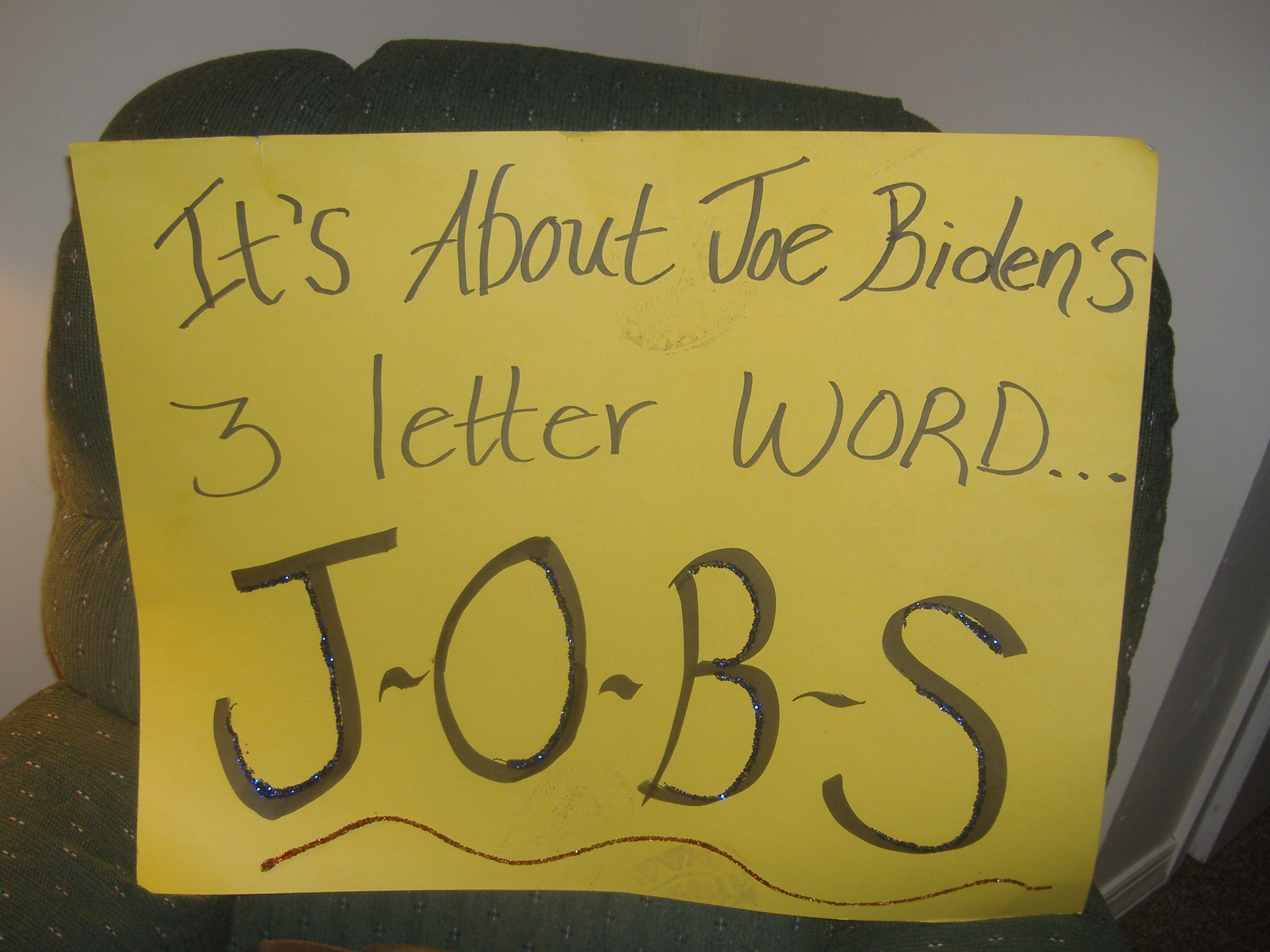
Since I was talking about the minimum wage in part three and the focus on the Ben Jealous “Make It In Maryland” plan was getting long in the tooth, I decided to split the piece in two and focus on the remaining items as a series of bullet points in this portion. While I wasn’t truly intending to space it that far, it does make for a good Labor Day post.
So these are the remaining topics in his MIIM plan, listed as a series of points I’ll respond to one at a time.
- Creating a Governor’s Office of Tech Transfer
- Better Retaining and Supporting Maryland’s Entrepreneurs
- Reclaiming Maryland’s Position in Biotech and Life Sciences
- Ensuring Prosperity Reaches Everyone By Tackling Chronic Unemployment
- A Job Boosting Program For Every Marylander Who Wants To Work
- Ending Youth Unemployment And Underemployment
- Boosting Employment For The Formerly Incarcerated
- Reviving Maryland’s Rural Communities
- Making Maryland A Center Of Global Commerce
- Connecting Workers To Jobs With A 21st Century Transportation Plan
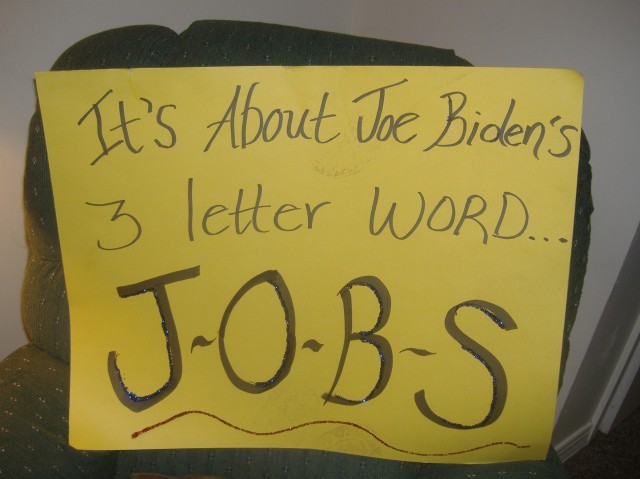
Office of Tech Transfer: Jealous begins this section by citing a number of vague, subjective statistics, including this howler straight from the Joe Biden School of Spelling:
The top five states for cybersecurity deals in quarter 1 of 2018 were California, Massachusetts, New York, and Texas.
These states are also bigger than Maryland, and have various industries and factors which may give them a natural advantage. Regardless, while it’s unknown just how large this OTT will be or where it’s placed on the pecking order, the biggest cost might be the freedom to elude red tape, to wit:
Help to coordinate infrastructure and development policy, including multimodal and active transportation infrastructure, smart growth land use planning, mixed-use development, and gigabit internet to create the urban fabric and connections that give rise to an innovation ecosystem.
I truly have issues with that sort of mission creep and interference with both local government and the private sector. As envisioned it seems to be more than just a clearinghouse that could be useful in coordinating a limited area of policy.
Maryland’s entrepreneurs:
While Jealous paints a picture of a state that’s not inclusive enough…
Ben Jealous will create the innovation environment that will enable more locally grown companies to grow and stay in Maryland. Ben Jealous will also consider whether rules related to bonding for contractors can be eased to enable more entrepreneurs to access contract work and remove unnecessary barriers. He will also work to make entrepreneurship more inclusive in Maryland. For example, black women are the most likely of any population group to become entrepreneurs, but they are the least likely to receive funding.
Ben Jealous will create a more level playing field to ensure this changes. As governor, Ben Jealous has also committed to raising women and minority business targets in the state to levels that better reflect equal representation. 29% is just far too low when 50% of our population are women and nearly 50% identify as minority. In order to support creation of these businesses, Ben Jealous has pledged to work with lenders who have a history of inclusive lending to support their models, identify additional strategies to capitalize businesses, and review bonding requirements for contractors that may pose unnecessary barriers.
…if you ask actual entrepreneurs they may say the problem is a little different.
For several years I was the recipient of a steady diet of updates from a company called Thumbtack.com – it’s actually a listing of entrepreneurs who provide various services. Over that period they have done a survey of business friendliness, which – even though I haven’t noticed the updates – has continued to this day and shows Maryland has been on an upward trajectory. But while Maryland has rebounded from failing grades to a B+ in Thumbtack’s 2018 survey, the one category they still receive a big fat F in is the tax code. That’s not on the Jealous agenda.
I don’t look at who owns a business, I look at the job they do – and so do most others. All affirmative action does is plant a seed in the mind of people who ask: did they get the job on their merits or because they checked a box of government approval someplace?
Oh, and one more thing:
Another critical part of changing our business culture in Maryland also is support new and emerging types of business ownership, including employee-owned businesses, worker co-ops, and other democratically-owned and operated businesses. These organization types are critical for challenging the notion that ownership of a business must concentrate profits in the hands of a few, and these organization types can open up the benefits of business ownership to many more individuals.
Whether a business is employee-owned or not – one good reasonably local example of employee ownership is the Redner’s grocery chain, which has very nice stores based on my experiences working in them a few years back in a previous career – doesn’t matter to me. But the fact Jealous opposes the “notion that ownership of a business must concentrate profits in the hands of a few” when it’s truly none of the state’s damn business is troubling.
Biotech and Life Sciences: This is mostly a series of platitudes whining about how Maryland has fallen from the top position, particularly behind Massachusetts which “made large investments in biotechnology through tax breaks, grants, and funding infrastructure.” That’s their taxpayers on the hook, so whatever.
If I were to make a suggestion for state encouragement, why not promote the area of biotech that deals with the agriculture industry? People tend to think of this as an urban phenomenon, including those at the state Department of Commerce as agribusiness is last among its “key industries.”
But maybe Jealous should read the state’s website because there’s already a program in place.
Chronic Unemployment: Aside from a vague pledge to “engage stakeholders” and conduct yet another useless study, Ben wants to throw more money at EARN Maryland (reversed as “Maryland EARN” in the Jealous plan), Operation HIRE (aimed at veterans), and the Maryland Apprenticeship and Training Program. While none would be large expenses, one has to wonder if having these disparate programs is very efficient and effective.
Job Boosting Program: To make a long story short, it’s a hiring program to create more state and state-dependent workers. Jealous cites a study done by the Department of Legislative Services that cites a chronic shortage of workers necessitated by budgetary reality. But the source material for the study makes me question its sincerity:
Research for the study consisted of data gathered from various documents; workload trend data; agency site visits; and meetings with the representatives of the American Federation of State, County, and Municipal Employees (AFSCME) and AFSCME employees. (My emphasis.)
It’s also worth noting that the number of employees the executive branch has been “shorted” is nearly matched by the number of additional positions at higher education, where staffing has increased 23% from 2002-18 (Executive Branch staffing is down 9.6% in that period.) Honestly, I don’t think we have a neutral referee doing this study. Needless to say, many of these new workers will be quickly absorbed into the public-sector union, which is, I’m sure, their quid pro quo for AFSCME support.
Youth Unemployment: Jealous would expand the YouthWorks program in Baltimore City to a statewide program and make internships or part-time jobs part of the public school curriculum. It seems to me the YouthWorks would be better tailored to a county or city level (one reason being: the city of Salisbury has a similar program in conjunction with the local Junior Achievement branch.) So the opportunities are already there.
As for the school curriculum, this is a matter where public schools could compete when it comes to school choice.
Formerly incarcerated: I believe Jealous is going to work along these lines by “banning the box” in private-sector employment (meaning applications cannot inquire about criminal record) and adding incentives to hire formerly incarcerated – however, there are private-sector employers already doing so. I believe this should be on a case-by-case basis and not a mandate.
Rural communities: The message from Ben Jealous: you can grow, but only a little bit and only on our terms. Developed areas can retain their advantage because we won’t let you compete.
Smart growth and conservation policies that Ben Jealous will promote will help Maryland to restore its reputation as a one that protects its most valuable natural resources, from farmland, to the Chesapeake Bay, to mountains, forests, and beaches. When our natural resources in land, water, and air are cared for, rural places are able to thrive as producers of agricultural products, thriving tourism centers, and choice places to live. In a 21st century economy, rural economies are also transitioning into being producers of clean energy, like solar and wind farms. Land in rural areas near existing development and infrastructure can be repurposed or ethically developed to host clean tech manufacturing, data centers, and other 21st century economic engines. Finally, rural economies are powered by small businesses, and, with proper support for early stage businesses throughout rural Maryland, these small businesses will continue to multiply and grow.
Basically, this is an extension of the MOM era where most agricultural land would be placed off-limits to development (except for solar panels and wind turbines, which are neither reliable nor desirable sources of energy). And say what you will about “low-impact tourism” – I will show you the difference between the economic base that is Ocean City in the summer season against whatever is drawn by Blackwater being a wildlife refuge. That’s not to say that I’m not glad we have the industry we do here, but we shouldn’t say no to more traditional development even if it’s placed in a more rural area.
This also ignores the transportation needs of this region, such as a second (southern) Chesapeake Bay crossing and, in cooperation with Delaware, an interstate-grade highway connection north to I-95.
As governor, Ben Jealous would provide additional funding to the state’s cooperative extension programs to develop technical assistance programs providing support to farmers transitioning into the 21st century marketplace. This would include linking urban agriculture and food production businesses with rural agricultural businesses, so Maryland families, restaurants, and commercial producers can conveniently access an abundance fresh agricultural products grown right here in Maryland.
If you were a savvy farmer, wouldn’t you already be doing this? Why is it a state concern?
We also have the talk of expanding broadband, the means of which is already in place here in Maryland as a non-profit cooperative. It will be interesting to compare their process and progress with Delaware, which is using more of a PPP approach for rural portions of Kent and Sussex counties.
Global commerce: Mainly deals with expanding Foreign Trade Zones around the Port of Baltimore. As the center of the local poultry industry that sends chicken products around the globe, I wonder why Salisbury couldn’t have one? Perhaps because it’s a federal designation. Jealous exhibits his Baltimore-centric view (and a little bit of ignorance) with this one.
A 21st Century transportation plan: The first page of this is devoted to Jealous whining about the cancellation of Baltimore’s Red Line boondoggle and Larry Hogan’s changes to Baltimore’s bus service. I think it’s hilarious how a 21st century transport plan uses the strategy and limitations of 19th century technology by advocating for more usage of the light rail service money pit.
And then we get to this:
Complete streets policies build thriving and prosperous communities by ensuring that the design of roads and other facilities is safe and convenient for pedestrians, business patrons, cyclists, and all other road users. As governor, Ben Jealous will make Maryland a complete streets leader by ensuring that ample funding is directed to local communities through the complete streets and other programs like Maryland Bikeways, and by ensuring that the Maryland adopts the most progressive complete streets policy possible.
So we cater to the 2% of travelers who use alternate means of transportation – ones that aren’t nearly as convenient and useful at a time such as this moment with a thunderstorm overhead – at the expense of the 98% who would like to get where they wish to go as quickly and conveniently as possible. This also works hand-in-hand with the effort to pack people into the urban areas, leaving vast wildlife corridors for critters to traverse.
Aside from a means of taxation in some states, those who crave control hate cars because they equate to freedom of movement and less restriction on behavior. If it’s 6:30 and I want to be at a 7:05 ballgame, I’m not going to ride my bike or walk – and sure as heck ain’t going to consult the Shore Transit routes to see if any run and stop close by. I have a car and I’m going to drive it.
Most of us do not want to be at the mercy of someone else’s schedule, which is why driving is the predominant means of personal transport in the nation. People like Jealous don’t like that, so rather than make driving easier they would rather discourage it.
If you really want a 21st century transportation plan, make it easier to use that freedom of movement by improving the roads. Promote entrepreneurship by giving less of a hassle to services like Lyft, Uber, or whatever competes with them rather than try and regulate them like taxicabs, making an artificial market the locality can use to create revenue. And rather than create the incentives for employers to encourage their employees to commute, perhaps they should instead encourage the use of remote work where possible. Given the proper broadband connection to my work server and to my boss, I could reasonably do much of my job at home.
So for this segment I can’t tell you just what the Jealous agenda will cost in monetary terms, but it’s going to cost the taxpayer a lot to wander down some pathways better trod by private initiative.
I think I’m going to put this series on hiatus for a little while, since I have a couple other projects I’d like to concentrate on. Thus, I may not get to everything on the Jealous agenda but I think you probably get the picture anyway. So I’ll see if I’m ready to resume by month’s end or not.