Thinking about tea

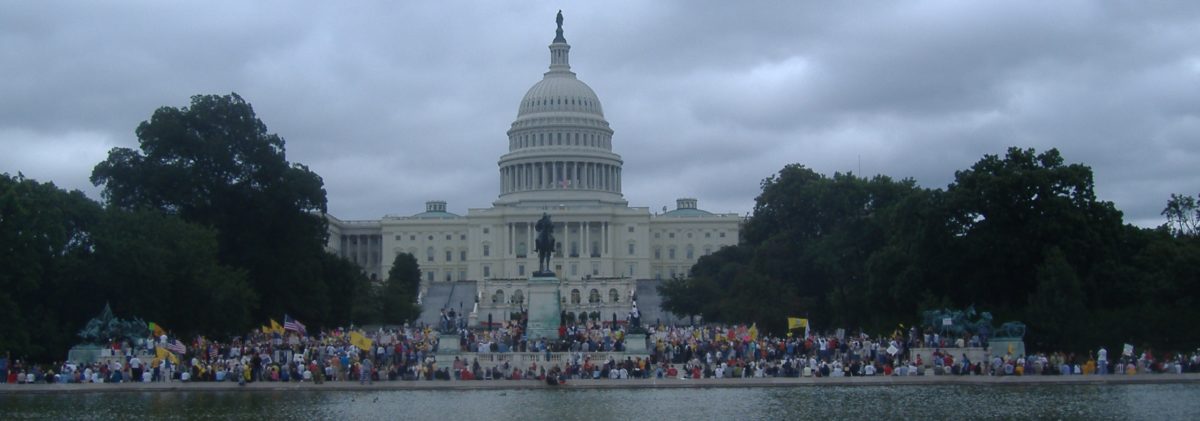
It’s a beautiful morning outside, and the snow pile that lay across the street from the driveway here has finally disappeared, so it must be spring! It’s not the type of morning which makes one think about doing taxes – as it happens, I haven’t done mine yet either – but it is the kind of morning which makes me think about the Tax Day TEA Party coming up in just over a month.

Certainly I hope the weather is more like what we’re enjoying today than the miserable damp and rainy day we endured last year, but the event promises to be bigger and better in many other ways. I know organizers are looking for musical entertainment to help fill a four-hour or so program, and that’s fine.

Yet I don’t necessarily want the event to lose its impact or its message by being bogged down in entertainment. It becomes less of a protest and more of an event like the annual picnic or fireman’s carnival if the pendulum swings too far in that direction.

The thing which appealed to me as I stood on the steps of the Government Office Building last year and said my brief piece was that the people I surveyed weren’t comprised of the same old political crowd I saw at any other party meeting or candidate forum. Instead, I was looking at a crowd of real-life Howard Beales – mad as hell, and they couldn’t take it anymore. Rather than stew about it or yell at the televison news, they came despite the weather to air their own grievances and make their voice heard.

No one knew if this would be a one-shot deal; after all, the naysayers always told us you can’t fight City Hall. But one protest sparked another and with several political battles being fought the anger and frustration were easily channeled into positive directions – in particular, the continuing fight against the takeover of one-sixth of our economy by the federal government. (If Medicare is broke, do we honestly believe putting more people on a similar program will enjoy success?)

So where do TEA Parties go from here? Well, they’ve spawned a copycat movement from their polar opposites, but the Astroturf known as the Coffee Party may not have the passion that it could have had it sprung up a year or two earlier. (Let me throw a question back at those guys – where were you when President Bush was enacting policies you didn’t like?)

But as the TEA Party movement matures there’s a risk that it ossifies into that which we protested against in the first place. While some say there’s room for a third political party, for years we’ve had a third, fourth, fifth, etc. and they’ve made little to no impact. The trick is figuring out how to infiltrate one (or, even better, both) of the major parties yet keep the movement fresh. After all, there’s always the possibility we get what we want, and like a team which wins the World Series after a long losing streak, we need to learn how to stay on top once we arrive there.

The biggest lesson, though, is that things will never again be as they once were. The TEA Party isn’t going to be the new cool thing forever but tyranny has been around as long as we’ve recorded history. In a time where fifteen minutes of fame is rapidly becoming fifteen seconds and yesterday’s hero is today’s zero (witness the souring of many on Sarah Palin), even protest has to change and grow.

But it can’t lose sight of the original message, for even when we have success the fight will be to maintain those victories.

Is it really a race, or hype?

As of today, we have a little under eight months before presumptive Democrat nominee (and incumbent governor) Martin O’Malley tangles with assumed Republican choice (and former governor) Bob Ehrlich. Both face primary challengers but it’s likely these two will be the guys come November.

I noted the other day that Ehrlich is closing the gap and this fact was not lost on the Rothenburg Political Report either. According to them, O’Malley is no longer “safe” but holds a “narrow advantage.”

Of course, the Maryland GOP is happy at the prospect, as party Chair Audrey Scott noted:

Governor O’Malley should be very concerned.  Maryland voters are rejecting his agenda of high taxes, high spending and growing our state’s government… Marylanders are hurting under the failed leadership of Governor O’Malley, who has proven to be only accountable to party bosses and big wigs, not Maryland families. The primary responsibility of an elected official is to listen to their constituency. Governor O’Malley is deaf to the cries and concerns of Maryland citizens who are hurting from his out-of-control fiscal policies. Since Governor O’Malley has taken office nearly 100,000 Marylanders have lost their jobs and unemployment has reached a 26 year high, clearly he is not listening to what the people of Maryland need.” 

In response, the Democrats are pooh-poohing Ehrlich’s chances. Noted Isaac Salazar on The OnLine State:

On page 19 of the (leaked to Politico) RNC document Steele and the RNC go through their targets in the 2010 gubernatorial elections. They seem confident about a lot of states – everything from Maine to New Mexico, Oregon to Tennessee, Michigan to Oklahoma, Wyoming to Ohio… OK, you get our point.

Noticeably absent… Maryland. In fact, Maryland was one of only three Democratic-held states the RNC is NOT targeting (New Hampshire and Arkansas being the other two).

With Bob Ehrlich an all but announced candidate for Governor, you would think he merits at least a mention? I mean, he is a former Governor, right?

It’s noteworthy this Salazar piece came out the day before Rothenburg’s analysis, and perhaps this could eventually change the RNC’s thinking. (It’s also funny the Democrats are worried about Michigan and Ohio – aren’t those incumbent Democrats doing a bang-up job on their state economies?)

The long-term horse race aspect is certainly more entertaining in a race that is pretty much cut-and-dried like Ehrlich vs. O’Malley than a divided one where several Republicans vie for a chance to become what conventional wisdom assumes will be cannon fodder for Barbara Mikulski. (Then again, conventional wisdom pretty much figured Scott Brown would never win the “Kennedy seat” either.)

So, newspapers need something to sell copies and bloggers need things to write about. While it’s good the experts feel we have a competitive race for governor, some of the undercards which are just as important (like a Jim Mathias trying to flip a longtime GOP seat to the D’s or the prospect his Delegate seat will go Republican) get all but ignored.

In those cases, less hype may make a better race. I’m looking forward to some big GOP wins come November.

Amedori launches online petition, calls on Mikulski to oppose reconciliation

Breaking news comes to me this morning from U.S. Senate candidate Carmen Amedori’s camp.

In an effort to contrast herself with longtime incumbent Barbara Mikulski and create pressure on the Democrat to forgo a vote for reconciliation (should it become necessary), Amedori has set up an online petition:

Today, Carmen Amedori, Republican candidate for United States Senate in Maryland, launched an online petition calling on United States Senator Barbara Mikulski to vote no on reconciliation for Obamacare.

“Reconciliation is not the method to pass health care reform. This parliamentary maneuver has never been used for such a sweeping piece of legislation,” said Amedori. “The President’s plan for health care reform is seriously flawed. That’s why no one elected Republican Senator will support the legislation.”

Reconciliation has been used 19 times since 1980. 12 of those times the procedure was used to pass omnibus budget bills that had an overwhelming support in the Senate. Only on 2 occasions were the budget bills controversial enough to lack bipartisan support.

“I am launching this online effort to send a message to our Senator that Marylanders don’t want Obamacare forced down our throats and that she should vote against reconciliation,” stated Amedori. “A national mandate is not a way to make health care more affordable.”

People can join Carmen’s effort by visiting her campaign website or by friending Amedori For U.S. Senate on Facebook.

Amedori believes that a health care reform package must include tort reform, associated health plans, rules that allow people to purchase health insurance across state lines, more emphasis on health savings accounts and a method for allowing people with pre-existing conditions to purchase insurance coverage.

Amedori is a former Maryland House Delegate where she served on the Judiciary Committee and quickly rose to the position of Assistant Minority Leader. She earned a distinguished reputation for being tough on crime, a strong advocate for property rights, and a champion for small business. In 2004, Governor Robert Ehrlich honored Amedori by appointing her to the Maryland Parole Commission where she served until last year.

(snip)

Amedori believes that as the next United States Senator she can do a better job for the people of Maryland. “It is time we had a Senator focused on results rather than political gamesmanship. As a former member of the House of Delegates, I know how to make a difference. Barbara has had 24 years and now is the time for new leadership,” added Amedori.

It should be noted I edited the original release slightly, but the point remains that if the Obamacare supporters choose the reconciliation route (which I doubt, since the House passage of the Senate bill gives us legislation which wouldn’t necessarily need to be reconciled anyway) Barbara would almost surely align with her fellow Democrats as being one of the 51 votes. Certainly Mikulski would feel safe enough in her seat to do so.

The other obvious reason for having the petition is gathering contacts for other communications from her campaign, which is fine – after all, I think voters should be well-informed about all of the candidates running. Carmen is unlike the others running in that she has a legislative record, and it’s one that’s been judged to be fairly conservative by the former Maryland Accountability Project (Amedori served in the House of Delegates 1999-2004.) But each voter should study all the candidates, judging their stated principles, goals, and experience inside and out of the political realm.

Since I got the release a little bit ahead of time, I can vouch the petition is up and running and I already signed it. You should too, even if you support one of the other six candidates currently in the race.

Poll update – day 3

It looks like two candidates’ supporters are taking this seriously.

As of about 3:00 this afternoon, it’s become a two-way race:

  1. Eric Wargotz     1,785  (49%)
  2. Corrogan Vaughn    1,156  (32%)
  3. Jim Rutledge     499  (14%)
  4. Carmen Amedori     128  (4%)
  5. John Kimble     43  (1%)
  6. Daniel McAndrew     5  (<1%)
  7. John Curran   4  (<1%)

Let’s look at what happened in the last 24 hours or so:

  1. Eric Wargotz     948  (54%)
  2. Corrogan Vaughn     783  (46%)
  3. Jim Rutledge     23  (1%)
  4. Carmen Amedori     2  (<1%)

No one else got a vote, so it’s obvious that this poll may have run its course as a useful exercise.

The percentage changes are as follows:

  1. Corrogan Vaughn  +12 (20 to 32)
  2. Eric Wargotz  +4  (45 to 49)
  3. Daniel McAndrew  0  (stays at <1)
  4. John Curran  0  (stays at <1)
  5. John Kimble  -1  (2 to 1)
  6. Carmen Amedori  -3 (7 to 4)
  7. Jim Rutledge  -12  (26 to 14)

The poll will end on Tuesday, and I’ll have the final totals and the conclusions I draw from them that night.

By the way, the “Eric” you see on the Polldaddy.com comments is not the candidate Eric Wargotz. I figured you’d know that but he took the time today to point out it wasn’t the case. I can moderate these comments to some extent, but only after the fact.

I think when I wrap this exercise up I may post some of the better comments and cases for some of the candidates.

Poll tracking – day 2

Well, things haven’t slowed down with my U.S. Senate poll, as the total response closes in on the 2,000 mark.

Again, I stress this isn’t a strictly scientific poll as there is the opportunity for multiple responses from the same person – but there is a time-out period built in. Yes, the system can be gamed but my theory is that the gamesmanship will occur roughly in proportion with actual support.

Here are the results I had shortly before 4:00 this afternoon:

  1. Eric Wargotz     837 (45%)
  2. Jim Rutledge     476 (26%)
  3. Corrogan Vaughn    373 (20%)
  4. Carmen Amedori     126 (7%)
  5. John Kimble    43 (2%)
  6. Daniel McAndrew    5 (<1%)
  7. John Curran     4 (<1%)

The other key number is tracking the daily totals as opposed to the overall totals. It was just about 24 hours since my first update, and the change since then has been most meaningful for Wargotz and Amedori. The percentage is the share of the votes cast in the last day or so.

  1. Eric Wargotz    582 (54%)
  2. Jim Rutledge     247 (23%)
  3. Corrogan Vaughn     220 (20%)
  4. Carmen Amedori     31 (3%)
  5. John Kimble     3 (<1%)
  6. Daniel McAndrew     2 (<1%)
  7. John Curran    0 (0%)

I did some checking on my Facebook page among the universe of friends I have and those associated with the Corrogan Vaughn campaign (including the candidate) plugged the poll twice, while a Wargotz ally did it once. Now here is the precentage difference from yesterday to today – you can see who benefitted at whose expense.

  1. Eric Wargotz    +12 (33 to 45)
  2. Corrogan Vaughn    0 (still at 20)
  3. Daniel McAndrew    0 (still at <1)
  4. John Curran    -1 (1 to <1)
  5. Jim Rutledge     -3 (29 to 26)
  6. John Kimble    -3 (5 to 2)
  7. Carmen Amedori    -5 (12 to 7)

This is what I mean by depth of support – Wargotz’s supporters continue to flood the poll and perhaps distort it somewhat. But the last time I did this Wargotz held a large early lead only to see Jim Rutledge supporters close the gap at the end, so perhaps this may play out again.

Tomorrow I’ll do another update – I expect the pace to slow down some during the weekend but a big share from someone could have a significant impact on the results. The poll continues for a few more days (I have an end date set for it but I won’t say when it is) so we’ll see whether the supporters can keep going – it determines depth of support and also helps me determine whether my theory is validated or not.

Ideas for the right direction

On Thursday the BrinkleyPipkin budget reduction act (in Maryland that’s SB1004, Budget Reconciliation and Balancing Act) had its hearing. When I got the release on this hearing this was the part which jumped out at me:

The Brinkley-Pipkin budget reduction act had a hearing before the Senate Budget and Tax Committee today. By taking significant steps to further reduce spending in this year’s budget process, the Brinkley-Pipkin plan buys additional time to constrain spending to the existing available revenues without the need to raise taxes.
 
A key feature of the plan is the elimination of built-in statutory increases in state programs. This feature and an additional $75 million in spending constraint over the next three years would allow current revenues to “catch-up” with spending, thereby bringing ongoing spending and revenues into balance.

Many lobbyists and county officials testified today against additional cuts to state spending. Representatives of unions also opposed the Brinkley-Pipkin plan of additional cutbacks including the removal prevailing wage from state projects. The majority of citizens and taxpayers who testified supported all efforts to cut back government overspending. (Emphasis mine.)

So once again we have the government and big-government interests (i.e. the lobbyists) vs. the people. The information I was provided also had a chart showing the difference between our current budget path (which will certainly lead to higher taxes) and the Brinkley-Pipkin projections.

In theory, at least, the Republicans’ proposal not only balances the budget but creates a small surplus.

Obviously the counties were there to argue that the budget would be balanced on their backs and perhaps they have a point. But this should also lead the local governments into an effort to prioritize what services they wish to deliver, with the public being involved by determining how much they want to pay. For example, it would fan the flames of the ongoing debate here in Wicomico County regarding the revenue cap the county currently employs.

Government cannot co-exist with a free society as a cure-all. Every dollar taken out of your pocket to pay for services they wish to deliver is a dollar that you cannot use as you wish, despite the fact it was freely given to you. (In more and more cases, however, that dollar was given to you by the same government who wishes to take it away.)

It’s way beyond time to consider that role government has to play and amend it accordingly. Maybe not all of the cuts in the Brinkley-Pipkin proposal are wise, but they can begin this vital discussion of the role our state government plays in our lives.

Poll tracking – day 1

With the huge interest in my poll regarding who should face Barbara Mikulski for the U.S. Senate seat she currently occupies, I thought it would be a good idea to keep a daily track of it for the duration.

Most of the major candidates have posted about it on their Facebook pages multiple times, so the sampling size is extraordinarily high. As of 3 p.m. this afternoon there were 779 total votes cast, and the interim results follow:

  1. Eric Wargotz     255 (33%)
  2. Jim Rutlegdge     229 (29%)
  3. Corrogan Vaughn    153 (20%)
  4. Carmen Amedori    95 (12%)
  5. John Kimble     40 (5%)
  6. John Curran    4 (1%)
  7. Daniel McAndrew    3 (<1%)

Obviously this is a very tight race and I encourage people to stay involved! I’ll try to keep this tracking going for the duration of the poll, which will continue for the next few days.

Stealing a post

My original intention was to write a very short post highlighting an excellent, well-documented piece on Human Events by Newt Gingrich regarding the specter of reconciliation – after all, he’s been in Congress so I would have to defer to his expertise on the subject. I don’t always agree with Newt but I’m a fan and the man has a pretty good understanding of history.

But in looking for the actual website for the above link (I get the Newt Gingrich Letter in my e-mail so I don’t necessarily go to Human Events all the time) I found an op-ed by Maryland U.S. Senate candidate Dr. Eric Wargotz detailing his trip to Massachusetts during the exciting final days of Scott Brown’s campaign.

What I found most interesting was that Eric didn’t pull any rank during the visit, going out and slogging in the trenches like hundreds of other political volunteers. Having done petition drives in the cold and snow of January in Ohio for a candidate who wasn’t even in my district, lit drops and door knocking in October’s chill, and working the polls on a number of raw and rainy Election Days both here and in my native area I could relate.

And while Eric didn’t have the chance to hang around to savor Scott Brown’s eventual victory, there is a thrill for those of us who are political junkies as the elections draw closer.

Yet it’s both political junkies and agnostics who can make a difference in the battle over health care. Newt’s article is important because he describes the process which either health care bill needs to go through in order to be passed. Aside from a few small cracks here and there, the GOP wall of opposition has held fairly firm over the last many months these Obamacare proposals have been debated (remember, the original goal was to have health care done by last August’s recess.) With Frank Kratovil being considered as one of the possible key votes on the current reform packages being considered, it’s very important to let him know his original opposition should stand.

Unfortunately, none of the phone calls and e-mails beseeching them to “just say no” to Obamacare are likely to dissuade our two United States Senators from toeing the liberal Democrat line and voting in its favor. Since Barbara Mikulski has put aside those rumors she was calling it a career, the national GOP will likely not invest much time or effort into the Maryland Senate race. (Too bad, because the money they wasted on Dede Scozzafava may have come in handy here.)

It just so happens that Wargotz is hosting an online “Mikulski Retirement Party” (it’s really a ‘money bomb’ fundraiser) tomorrow. That’s an idea borrowed from the Brown campaign too, and if it works half as well as Scott’s he’ll gain an even larger financial advantage over his two main contenders. (He had a huge cash-on-hand advantage on Jim Rutledge at the end of 2009, but Wargotz’s pot was less than 1/10 the size of Mikulski’s. Carmen Amedori has just entered the race so she has no FEC reporting data yet.)

Right now we have to play the hand we were dealt in 2008, though, so it’s up to us to convince the jokers we have to vote in our country’s best interest and scrap this health care debacle once and for all.

Ehrlich slowly closing the gap

A Rasmussen poll taken late last month shows former Governor Bob Ehrlich within striking distance of Martin O’Malley. The likely Republican nominee now trails by 6 points, 49 percent to 43 percent.

Neither candidate is disliked by voters, though, as both candidates’ personal favorability ratings lie in the mid-50’s (O’Malley 54, Ehrlich 55.)

On job approval, though, Governor O’Malley is at 53 percent. While that’s an improvement over his September numbers in a Gonzales Research survey, looking deeper into the poll suggests his support is relatively tepid – strong disapproves lead strong approves 23-18. However, previous Gonzales data had saddled O’Malley with a sub-50 approval rating since March 2007 so the spin machine must finally be working in his favor.

It’s also worthy of note, though, that O’Malley’s numbers were at the lowest immediately after the tax increases of the 2007 Special Session he called took effect in 2008. At that point he was 10 to 11 points underwater on approval/disapproval. That’s also why I believe any tax increase comes immediately after he’s safely re-elected.

By comparison, President Obama has a 59% approval rating in Maryland with strong approves leading 38-32 over strong disapproves. Obviously Obama is quite the polarizing figure, even here.

In September, the Gonzales poll showed O’Malley leading 49-38 over Ehrlich, but O’Malley’s approval rating was only 48 percent. Oddly, that poll had both candidates’ personal approval numbers much lower (O’Malley 47, Ehrlich 42) so it appears time has burnished the perception of both gentlemen.

Obviously the poll which counts will be the one taken November 2nd, but pocketbook issues might have a way of changing the snapshots in time we see between now and then. Truly there is no other issue of importance in this race.

Robbing Peter (and John, David, Mary, etc.) to pay Paul

One criticism I’ve had about Maryland’s budget system is its lack of flexibility. There are a lot of money pots out there besides the General Fund, and Martin O’Malley seems to want to take money out of every one of them to balance his FY2011 budget. This from Americans for Prosperity:

As you know, the Senate Budget & Taxation Committee will be holding a public hearing this Wednesday on SB141. This bill, the Budget Reconciliation and Financing Act, will transfer nearly $1 BILLION from the state’s 382 special funds to cover Gov. O’Malley’s budget deficit.

(snip)

One of the funds Gov. O’Malley is proposing to raid is the Transportation Trust Fund (TTF). Started in 1971, the TTF is the account used to pay for road, bridge and infrastructure repairs. It is primarily funded by the gas tax – each time you fill up at the pump, you are contributing to road repair…or so you thought. This year, O’Malley has decided to take $125 million of those taxes and use it to paper over his $2 billion deficit.

Stealing from the Transportation Trust Fund becomes even more problematic next year, because the TTF is already under-funded. When the fund runs dry you can bet that the liberal politicians will want to raise taxes. Senate President Mike Miller has been pushing the idea of a gas tax hike for the last few years.

Another fund that O’Malley has decided to attack is the Injured Workers Insurance Fund (IWIF). IWIF is a low-premium insurer for many businesses who provide workers compensation to employees. It is financed by the premiums each policy holder pays on a quarterly basis.

Not only is the legality of the state confiscating $26 million from a private insurance company in question, but this move will hurt small businesses. Again, when the fund is drained, the premium rates will rise to replace the stolen revenue.

Small businesses are the engine of our state economy – they employ nearly two-thirds of the workforce in Maryland. If we expect an economic recovery with job growth, the government cannot continue to put undue burdens on businesses. The last thing small businesses need right now is to be paying higher insurance premiums or gas taxes.

382 special funds in the Maryland budget? WTF? Anyway, the Maryland Senate Republican Caucus also weighed in:

Entering the 2010 legislative session, there were few remaining reserve funds left to tap. They have all been depleted. O’Malley has exhausted all available reserves except for the Rainy Day Fund. Tapping the Rainy Day could jeopardize the coveted Triple A bond rating which would cause great embarrassment to the administration.

So O’Malley turned to the Injured Workers Insurance Fund to tap a reserve of $20 million. Problem is – the IWIF reserve is not state money. It is not taxpayer dollars. Instead it is overpayments of insurance premiums from small businesses throughout the state.

Then is it legal? A 1968 opinion of the Attorney General’s Office states that reserve funds of the State Accident Fund (IWIF’s predecessor) are not state funds accessible for general purposes. Established as a nonprofit insurance company, IWIF is a quasi-public agency and state use of insurance overpayments as a fund swap would be unconstitutional.

To cover their tracks, the O’Malley Administration has now introduced bills (Senate Bill 507 and House Bill 1008) that would give the Governor authority to transfer the $20 million this year just as long as it’s never done again. Go figure!

So, not only do we have the BRFA bill but now another bill in order to fix things for this year. Sheesh.

The larger question is what we’ll need to do next year to fill in all of these pots. With the federal portion of the state budget now eclipsing 60 percent, one would think that Barack Obama may bail out his cohort if he’s reelected this November. But with these funds come strings and that lack of flexibility will probably preclude O’Malley being able to make up the shortfalls with federal money next year.

Three years ago, Governor O’Malley called a Special Session to address this issue and its result was a number of tax increases which were supposed to correct the state’s structural deficit. However, the increase in the sales tax, cigarette tax, and a (since-repealed) “tech tax” on computer services were counterbalanced by a huge increase on spending which attempted to bring health insurance to thousands more Marylanders.

To the surprise of everyone - except those with a little bit of economic common sense - these new levies didn’t bring in as much money as the so-called experts predicted. In all that’s not so bad, but other previous taxes like property and real estate transfer taxes also declined. Making matters worse (but certainly not unexpected) is the outflow of capital due to the “millionaire’s tax” – again, from the Senate GOP Caucus:

According to an Associated Press article posted at Examiner.com, Montgomery County has experienced a 27% decline in tax returns from high income earners. This decline has contributed to a loss of $4.6 billion in taxable income: “County Executive Isiah Leggett says some wealthy residents who own homes in other states are establishing residency elsewhere. Officials believe the state’s millionaire tax is a factor.”

You think?

Unlike the perception progressives attempt to create about TEA Partiers as people who want to get government services without paying for them (a description more apt for Democrat voters,) most don’t mind paying a fair share in taxes. But what we want in return are efficient services which perform necessary functions, and too often we find that government at all levels fails to deliver on one or both sides of the equation.

If Martin O’Malley truly decided to live within his means, he would gain the intestinal fortitude to make cuts such as the insurance program he started. Obviously it’s a decision which affects a large number of people, but so would increasing taxes and fees. Raising the gas tax, for example, would disproportionately affect poor and middle-class Free Staters and rural residents like those on the Eastern Shore would pay more of a toll than city residents along the I-95 corridor.

One issue sure to come up in this year’s campaign will be fiscal accountability, and while Bob Ehrlich wasn’t the poster child for frugality the state was in much better financial shape when he left office than the potential mess he inherits should he be re-elected for a second, non-consecutive term.

Perhaps a solution would be to bring in some solid fiscal conservatives for the General Assembly in with Ehrlich, hopefully to keep his free-spending tendencies in check. Mark my words, if Martin O’Malley is reelected 2011 will be a rerun of 2007 – a session devoted to raising taxes and killing off whatever recovery the state is scratching out by then.

The case for an elected school board

Tomorrow the Wicomico County Council discusses the FY2011 county budget (as part of legislative session 2010-05.) Obviously a significant chunk of that budget will go to the county’s education funding and County Executive Richard Pollitt conceded “there’s no way” that Wicomico County will meet the state Maintenance of Effort requirements next year. It’s beyond questioning that money is going to be a contentious issue for those who were elected to take care of the budget.

However, the Wicomico County Board of Education (WCBOE) has come under some withering fire lately regarding the travel budget allotted to school personnel. Spearheaded by County Councilman Joe Holloway, this effort found the taxpayers were occasionally footing the bill for everything from meals at Hooters and Ruth’s Chris Steakhouse to the morning coffee at Wawa. While most of the expenditures were on the up-and-up, the attitude reflected by those who abused the process (and paid for the previously-charged expenditures out of their own pocket once it was learned Holloway was on the case) was that of an entitlement mentality.

As mentioned before on my website, the present FY2010 budget has been revised, but in essence only 54% of the budget was at stake – the 46% belonging to the WCBOE was practically untouchable due to state mandates.

It is my belief – a belief shared by a growing number of people – that Wicomico County is not well served by having an appointed school board in charge of holding the schools accountable to the taxpayers. All but a handful of Maryland counties have gone to an elected school board, and I think its long past time to adopt the same here.

As the system stands now, the seven appointed members of the WCBOE come into office via a process rife with the prospect of patronage. Until a change is made, there will always be at least three Republicans and three Democrats on the board, with the pivotal seventh vote awarded to the party whose candidate won the last race for governor. Thus, the first Democratic vacancy which occurred after Bob Ehrlich was sworn in back in 2003 was filled by a Republican and the first GOP vacancy after Martin O’Malley came into office in 2007 was filled by a Democrat. To be more proper, vacancies were filled from a list provided by the local Central Committee of the respective party (so as a member of the Central Committee I had influence on any board member replacing Republicans, except the first GOP vacancy became a Democrat seat.)

If you look at things on that level, it’s clear that Wicomico County may have preferred a 4-3 GOP split based on who they selected as governor since Bob Ehrlich carried Wicomico handily. But the decision was taken out of their hands based on the statewide vote.

While I take my job seriously as a member of the Central Committee, it seems to me that the input of selecting those who are responsible for running our schools should be at a much higher level than a seven- or nine-member body. And looking at things from a strictly partisan basis I understand there’s a risk the voters could select an even more partisan mix of 5-2 or 6-1 Democrats based on voter registration numbers. (While it’s likely the BOE would be a “non-partisan” race, certainly the Democrats will be recommending a slate of candidates as would the GOP.) Yet this also provides an opportunity for those who are politically unaffiliated to have a greater say in affairs as well.

People who are passionate about education tend to be the ones who want to see more local control of their schools. They join the PTA or volunteer in the classroom in order to do their part for the school community.

But the process as it stands now doesn’t necessarily reward these attributes. The folks in Annapolis don’t have much of a body of work to judge would-be BOE members on – usually it’s just a curriculum vitae and application. An electoral system could be set up to allow district representation, giving a person who’s known to the parents of a particular school a better opportunity to serve at a higher level.

In the end, though, it comes down to accountability. The system we have now doesn’t provide for enough, and moving to an elected school board would give the people of Wicomico County the final say on just how a board member is doing.

We can get the process started with leadership on County Council. They can pass a measure to put a referendum on the ballot this fall showing the amount of support there is for an elected school board. Once that passes (as I’m confident it would) then the General Assembly could act accordingly and pass the law allowing BOE elections to occur beginning with the next general election in 2012.

That’s the easy road. If County Council refuses to act, the ballot measure would have to be achieved via petition and getting signatures is a time-consuming process. We could also be at the mercy of outside events, as a 2001 petition drive was shelved in the wake of 9-11.

Joe Holloway is already on record as supporting an elected school board, so I call on his fellow Republicans to lead the way and allow thoughtful Democrats to follow behind if a veto override is needed. Once we get this on the ballot, at that point we can work on just how the transition would be achieved, the question of staggering board members’ terms, and the like. That’s actually fairly easy since we have a number of counties to view as models.

The hard part is getting there, so I encourage the County Council to start the process soon.

Wicomico Lincoln Day Dinner rescheduled

After lengthy negotiations with the former Governor’s staff, Governor Ehrlich will be speaking at our rescheduled Wicomico County Lincoln Day Dinner on Saturday, April 3rd at Salisbury University. I’d presume the time remains the same.

With the rumor brewing that the state’s former chief executive will finally announce his candidacy on Maryland Day (March 25th) this may be part of an extended initial campaign swing by Ehrlich. Other local and state GOP candidates will also get a chance to briefly introduce themselves to the GOP partisans.

Those who made reservations for the snowed-out February 6th event are encouraged to attend the rescheduled event. Details will follow for those who cannot make the new date.

Next Page »

hit counter

Please note that the opinions expressed on monoblogue are not necessarily those of the Wicomico County Republican Party Central Committee, of which I'm a member. (But they probably should be.)

News from the loony left:

The Patriot Post