Hot air or black gold?

I found this to be interesting; unfortunately the omission is not surprising. Last week on the Energy Tomorrow blog, a map showing all the areas placed off-limits to oil and natural gas exploration was posted; meanwhile, as the piece by Mark Green points out, the governors of Virginia, North Carolina, and South Carolina called on the federal government to allow drilling off their coastlines. Needless to say, I didn’t see Martin O’Malley’s name on that letter because he’d rather waste time and money tilting at windmills, and “can’t imagine” anyone would want to drill for oil off the coast of Virginia. Better think a little harder there, governor.

The naysayers also would tell you there’s only a limited supply of oil off our coast, anyway. But who really knows? The estimates of Outer Continental Shelf energy resources are over 30 years old, created at a time when people believed in “peak oil” and that energy resources in this part of the country were pretty much played out. Hundreds of massive deepwater oil finds and millions of cubic feet of natural gas unlocked through fracking later, we know better.

Yet our governor swears up and down the market is there for offshore wind, and insists it would cost us no more than a couple bucks a month. But why can’t we have both?

It seems to me there are vast swaths of ocean area being debated about here, hundreds of square miles. How much space (and height) does a deepwater drilling platform really take up? Wouldn’t it be possible for the oil platforms and the windmills to coexist? I honestly don’t see how one would affect the other, with the possible exception of being careful to drill away from the underground infrastructure needed to transmit the electricity produced to shore. Aside from that, there’s a lot of ocean out there. Certainly the purists who like to look out over the ocean and gaze at the stars at night would object to the lights of oil platforms within their line of sight, but the same can be said for wind turbine towers (they have to be lit as well, so planes and boats don’t run into them.)

You know where I stand. But if we can have both and the market will support them, I say go for it. Bet I know which would be built first.

Share

Gambling: Maryland’s growth industry?

There are guys who really must like parsing economic statistics, and I’m getting the impression Change Maryland employs several of them. Toying with Martin O’Malley like a catnip-addled feline pawing about a ball of yarn, their latest effort is summed up neatly this way by Change Maryland head Larry Hogan:

Combined, the gambling industry is expected to generate 3,250 jobs or nearly 40% of the 8,500 new jobs announced in 2012. Other sectors pale in comparison with cyber security expected to generate 2,612 jobs, healthcare 379 jobs and manufacturing 334 jobs. By contrast… sectors (lauded) by the O’Malley Administration, most notably green energy, are expected to generate just 110 jobs.

“I don’t know how Martin O’Malley can say with a straight face that jobs are a priority of this Administration with numbers like these,” said Hogan. “These numbers are lopsided and pitiful.”

I’m not sure if the total includes the dozens of jobs created by the fat Christmas bonuses awarded by the media conglomerates who own the television stations made wealthy by the millions of dollars spent contesting Question 7, but it is a sad state of affairs when casinos create more jobs than manufacturing. Yet that’s the reality in Maryland. And as Hogan pithily adds:

While I’m glad that some will get jobs as blackjack dealers and cocktail servers, the best careers are those that require science,  technology and engineering skills that Maryland educators are working so hard to develop in the classroom.

The Change Maryland release compares the job creation in Maryland and Virginia, and makes the case that our neighbor to the south is kicking our tail in that regard.

Looking at these statistics in a more parochial manner, the Eastern Shore as a whole is getting very little benefit this year from the state’s economic development team, with one project apiece in Dorchester and Worcester counties. Total jobs created (over three years, mind you) are projected to be 80. The two companies in question invested a total of $3.5 million in new facilities, but by way of comparison that’s less than a month’s revenue from the casino at Ocean Downs. And 80 jobs is a drop in the bucket compared to some of the major employers here in Wicomico County alone.

Needless to say, the state’s efforts are puny and minuscule compared to how much they put into attracting jobs along the I-95 corridor. Our tenth or so of the state’s population could use more assistance in trying to grow and develop as opposed to the War on Rural Maryland we’re forced to endure from Annapolis. More or less we’d like to be left alone, although if you could work with Delaware and the federal government on an interstate-grade highway from Salisbury to I-95 at Wilmington we would be mighty thankful. I look at it this way:  if we could get ourselves to be an easier 4 hour drive from the New York megalopolis, I believe it could help both tourism and industry. Something I didn’t know until I looked it up is that we here in Salisbury are actually closer to New York City than to Cumberland, Maryland.

But whatever the job creation task required, the folks at Change Maryland are generally quick to point out that Maryland is lacking in that department. You can call it partisan politics if you want, and perhaps you’d have a point since Hogan is a Republican. But facts are facts, and the numbers which come from neutral referees continue to show that Maryland isn’t the job-creation machine our state government would lead you to believe that it is. And when three of the four counties which make up our little corner of the state lag with unemployment over 9 percent (Wicomico isn’t much better at 7.9%) it tells me that the “One Maryland” fallacy espoused by our governor is just that.

If a chain is defined by its weakest link, we’re the ones who need the attention. Stop listening to the Agenda 21 crowd who would like to return the Eastern Shore to a pristine wilderness (aside from the beachfront condos they annually rent in Ocean City and from Ocean Downs, since it creates revenue for the almighty state) and start listening to what we who live here have to say. Really: I’m not lying to you when I say growth is good for us, so help us cut our unemployment rate down by stepping aside and letting us do it.

Share

The tax people cometh (again)

November 14, 2012 · Posted in Business and industry, Maryland Politics, Politics · 1 Comment 

This should not come as a surprise since it’s tried almost every year, but the so-called Maryland Health Care for All coalition once again is pitching to raise cigarette taxes by a dollar per pack. In last year’s case, the proposed funding would go to smoking cessation programs as well as “(programs) that address childhood obesity, long-term care for seniors, and improved access to health care services for Maryland families.”  All on the backs of people who choose to partake in a legal product; bear in mind a tax on cigarettes is among the most regressive out there which may explain why these bills rarely get beyond the hearing stage.

And if it seems like only yesterday we raised the cigarette tax by a dollar a pack, you’d be somewhat right on a state level. The 2007 Special Session yielded a bill which, among many other taxes, was supposed to bring to the state treasury an extra $146 million by fiscal year 2012 (which ended this June.) That tobacco tax went into effect at the beginning of 2008, but in the FY2009-11 period, revenue turned out to be about $84 million short of projections (based on numbers from the state.) And Maryland isn’t alone in finding this out.

They’ve also found out that people will vote with their feet, whether on a small scale (it’s an easy drive from here to Virginia, with U.S. 13 passing by a number of cigarette outlets in the first few miles across the border) or a large one. State Comptroller Peter Franchot noted earlier this summer that bootleg cigarette seizures had skyrocketed over the last two years. With a difference of $1.70 a pack, the incentive is certainly there for easy money and many feel it’s worth the risk – yes, the state seized $2 million worth of cigarettes but perhaps ten times that amount made it across the border unmolested. (That doesn’t count the people who might get five or ten cartons just across the state line.) As is often the case, Maryland’s loss is Virginia’s gain.

Yet the coalition led by Maryland Health Care for All wishes to double down on this mistaken notion that people will be priced out of cigarettes. Instead, the tax will only serve as a means for those employed by the state to have their pencil-pushing jobs paid for by a group which usually doesn’t pay a whole lot in taxes. If the idea is one of taxing the poor, our state is certainly working toward nirvana between expansion of gambling, the additional sales taxes on alcohol and cigars passed last year, and the bid to increase taxes on cigarettes yet again.

As always, I have to say that I find it the utmost in hypocrisy that the state tries so hard to tell people not to smoke or drink, but depends on the usage of these legal substances to produce hundreds of millions of dollars for the state to spend. (Yet they wouldn’t legalize marijuana which, if treated like tobacco, would likely raise hundreds of millions more and as an added bonus clean out the court system of hundreds of otherwise law-abiding citizens.)

But one thing about liberal ideas in Maryland: their sponsors are nothing if not persistent. They’ll happily introduce the same bill for several years in a row and slowly gather support from the brainwashed. If another cigarette tax doesn’t pass this year, they’ll quietly try again in 2015 – 2014 is an election year so we may be spared. In the end, it eventually passes and a little more of our freedom and spare change is stolen away.

By the way, this writer doesn’t smoke and has mild asthma. But I’m not going to deny someone else the right to use a legal substance just because I don’t choose to.

Share

One last weekend…

…and everyone wants help! Many of those appeals come from giving the national campaigns a hand in Ohio and Virginia.

(Update: read to the end for vital new information.)

For example, the Maryland GOP (on behalf of Mitt Romney) is going to those battleground states. But they’re also backing events in Harford, Montgomery, Washington, Cecil, and Queen Anne’s counties as well. Most will be Saturday, although the Harford event runs through Monday and the Queen Anne’s sign waving is later this afternoon.

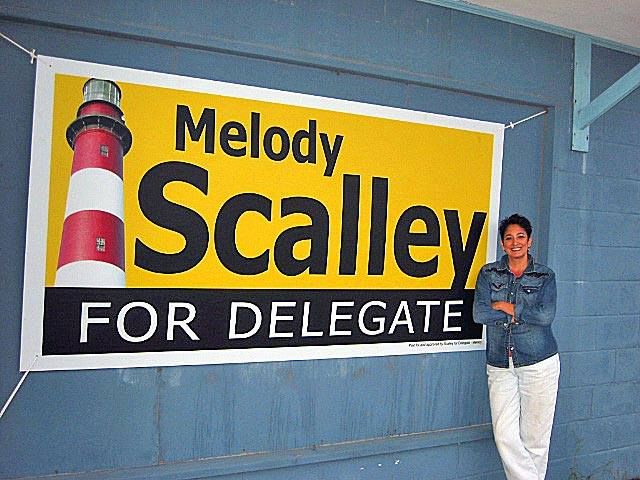
And for those on the Shore who may want to help in Virginia, my friend Melody Scalley is organizing her own Saturday’s worth of activities in several Tidewater-area locations: Norfolk, Newport News, Virginia Beach, and Chesapeake. It looks like they’ll be canvassing in 2-3 hour shifts during the day Saturday and one shift in Norfolk on Sunday afternoon. As before, you can contact her at (703) 258-4200 to help out.

Since the extended early voting comes to an end today, volunteers can shift from the polling places out to the neighborhoods.

There’s also been an important change in absentee balloting. An Executive Order signed by Governor O’Malley states:

Registered voters who are out of their county of residence due to Hurricane Sandy are authorized to apply for an absentee ballot up to 5:00 p.m. on Monday, November 5, 2012. The State Board of Elections is authorized to electronically deliver absentee ballots to such voters. Completed ballots must be mailed on or before Election Day and received by the local board of elections no later than November 16, 2012.

So those displaced by Sandy will be treated similarly to military voters.

While I’m thinking about voting, here’s more to ponder:

It appears that about 1 in 10 voters overall will opt to vote early, despite the loss of two days earlier this week. Through Wednesday a little over 225,000 voters had already voted early. Compare that to just 11,793 total absentee ballots requested throughout the state.

It’s interesting to note as well that as of Wednesday 41% of Democratic absentee ballots had come back, compared with 34% of Republicans and 31% of unaffiliated. Democrats also have the upper hand insofar as early voting goes, as 7.4% of them statewide have made their choices compared to 4.9% of Republicans and 3 to 4 percent of unaffiliated and minor party members.

What this could mean on election night is that ballot questions and Democratic officeseekers will probably grab an early lead because these votes are actually counted during the day and released right after the polls close. So issues like gay marriage and in-state tuition for illegal aliens may have a seemingly insurmountable 60-40 lead early on, but as rural precincts tend to come in first those leads should evaporate – even as early voting covers about 10% of the electorate, in a Presidential year turnout in Maryland runs around 60 to 70 percent. In both instances, though, it may be a long night.

Update: There is another non-political – but certainly more important – volunteer effort going on tomorrow morning. This comes from my former local blogging cohort Julie Brewington, with emphasis mine:

Please come and help our Neighbors in Crisfield to Recover from Hurricane Sandy TOMORROW!

Please come dress in work attire, waterproof boots, and gloves. Bring a rake if you have one.

Saturday, Nov. 3 at 10 a.m. – Crisfield City Hall Parking lot, 319 W. Main St.

Even if you don’t have any equipment or special skills, we can use your help. To volunteer you should be physically fit and able to do manual labor. Water will be provided, but be prepared to work on sites that do not have basic sanitary services or utilities.

We will endeavor to select sites that are safe, but you must use your own common sense to protect yourself from dangers such as falling trees, submerged holes, and the general danger of being on a worksite with other untrained, unskilled volunteers. You assume all responsibility for your safety by volunteering and we will ask you to sign a release of liability of the Crisfield Chamber of Commerce, the City of Crisfield and the homeowner or property owner we are helping before assigning you to a work crew.

Equipment and skills we need

If you do have skills or equipment, we are in need of the following equipment along with persons who know how to use them:

Chainsaws
Large pickup trucks
Skillsaws
Power drills
Axes
Rakes
Plywood
Gloves
Gasoline for chainsaws

Supplies Needed (Drop Off At The Ambulance Squad Coming Into Town)

Bleach and cleaning supplies (mops, buckets, etc)
Household goods
Gently used clothing
Respirators
Portable Heaters
Blankets
Contractor clean up bags or large black trash bags
Bottled water
Rakes
Plywood
Gloves
Gasoline for chainsaws

Mold Removal is Needed. Please visit this site for Mold Removal Kits, with Household supplies and bring them if you can.

Saturday Volunteers are asked to print and bring signed release.

We will have blank release forms, but anyone wishing to volunteer tomorrow is asked to (sign a) volunteer release form to participate in our cleanup effort. We need to keep track of our volunteer ours for disaster relief purposes. Thank you!

Share

A friend needs a hand again (and so do I)

You may recall that last week Melody Scalley of AFP Virginia was looking for people to do door-to-door campaigning in the Hampton Roads area. Well, the same rules apply for this weekend and the two locations I cited from last week are still in play.

But this weekend (and next) I’m looking for a few good men and women, too. If you are planning on going to the Good Beer Festival this weekend or Autumn Wine Festival next weekend, I’m looking for conservative volunteers to staff our presence there. Most of the time you just need to smile, be friendly, and engage those who come looking for campaign information by pointing them in the RIGHT direction. It’s really not hard.

My biggest need this weekend is for people later on Saturday afternoon (after 4 or so) and all day Sunday. The Good Beer Festival runs from 12:30 to 6 on both Saturday and Sunday, and we’ll have a tent, table, and a couple chairs. Being a week out, I haven’t seen my signup sheet at headquarters recently but at last check this trend seems to also hold true for the Autumn Wine Festival. (Don’t quote me on this, but I’ve heard a rumor that a certain statewide candidate popular with area conservatives will be at the Autumn Wine Festival to campaign.)

You can drop me an e-mail: ttownjotes (at) yahoo (dot) com if interested. Or if you wish to help Melody out, her number is (703) 258-4200.

Share

A friend needs a hand

Originally I was going to write this evening about the Maryland DREAM Act debate which happened in Salisbury last night, but that isn’t time-sensitive so I’ll post my thoughts on that tomorrow.

In the meantime, one of the longest-tenured and dearest friends of monoblogue sent out a bat-signal tonight and I’m responding. She lives in Virginia and has taken on the daunting task of coordinating the eastern end of the state for their chapter of Americans for Prosperity. Melody Scalley has been a freedom fighter for several years as a local radio host, 2009 candidate for Virginia’s House of Delegates, and all-around advocate for conservatism.

But right now she’s looking for the cavalry to come in this Saturday, as AFP is making a house-to-house push in the Hampton Roads area. Melody is looking for volunteers who would like to help with several activities, but most specifically door knocking on Saturday. I spoke to Melody earlier this evening and was informed that AFP will cover travel expenses for those coming down from our part of the Eastern Shore. You can also help on the phones from the comfort of your home.

Now I understand this practice of helping out in Virginia has ruffled a few feathers in Maryland because we have key races and good candidates who need help here, and I completely get the point. This appeal, then, is more for those who would like to help with AFP’s practice of educating voters and helping them make the right choices. I’m trying to expand the pie of political activism in instances where the political races may not excite you, but helping to promote the long-term conservative cause does. To that end, I agreed to provide this forum to let people know – conveniently, this weekend is not a Maryland GOP Super Saturday.

These two sites are probably the best in terms of ease of access for Maryland’s Eastern Shore residents:

  • Cagney’s Restaurant, 1108 East Little Creek Road in Norfolk (8:30 a.m.) Onsite contact: Joan Maguire
  • Parking lot at the Office of Gary Byler, 505 S. Independence Boulevard in Virginia Beach (9:30 a.m.) Melody is the contact for that site.

If you’d like to help out a good Eastern Shore conservative (and genuinely nice lady) give Melody a call at (703) 258-4200; that’s her direct AFP line.

Share

Thoughts on a photo

August 5, 2012 · Posted in Business and industry, Delmarva items, Personal stuff · 1 Comment 

This photo was taken by Larry Dodd in the small hamlet of Horntown, Virginia.

I didn’t take this photo, my friend Larry Dodd did (and thanks to him for sharing.) But I could have.

I have no idea who owns the house trailer or the tricked-out Hummer, but I have seen both in my travels. My job takes me through the small hamlet of Horntown, Virginia on a weekly basis because I cut through there on my way to Chincoteague. Yet it got me to thinking that the photo reinforces a point I’ve made in the past (and present, as you’ll see later.)

If one were to do a photo essay about the death of rural America, Horntown could be a poster child. The unincorporated Accomack County community is in one of the rare parts of Virginia that’s losing population. Abandoned houses, which in several cases are falling down, line up along the town’s main thoroughfare, Fleming Road. The center of town, which also features a trailer park advertising Section 8 acceptance, is a stark contrast to upscale housing developments just outside the town or the large farms on the south end of the village. If memory serves me correctly the only businesses within Horntown are a day care center and the post office – a failed service station sits abandoned with brush growing inside thanks to the lack of a roof or windows – at the opposite corner of the post office. If you want groceries or gas it’s necessary to travel over to Oak Hall or New Church, each about 10 minutes or so away.

But there in Horntown sits this house trailer, which the owner thoughtfully remodeled with a sloped roof. One could call it a redneck home improvement but if it makes the place look more like home, so be it. The adult-sized bicycle on the porch is a nice touch as well, since it’s quite possible the Hummer has to sit at times because its owner can’t afford the gas to put in the truck.

Now this essay isn’t about the decline of rural America, although it could be. What got me to thinking about the point I’m making here are the priorities shown.

I’ll admit I’m not down with the ins and outs of what some might call “pimping out my ride.” (The vernacular may be so ten years ago, but I don’t make an effort to keep up with that. It’s hard for me to stay within 140 characters for Twitter, let alone track dialect.) But I am very, very sure that Hummers – which were derived from a military vehicle designed for less-than-optimum travel conditions – didn’t come from GM with 30-inch rims, color-keyed to the rest of the car, or a chrome step for that matter. (I believe the bright yellow color was standard, though.) And something tells me that if the car was traveling along the road I would hear the thump of the bass before I ever saw it.

It would be my guess, then, that the cost of the aftermarket improvements on the car might be gaining on the worth of the car itself. Meanwhile, the car just might be worth more than the trailer it sits in front of.

Now I realize this is America, and people are still free to spend their money however they please (once they pay off Uncle Sam.) But I have to question the judgement of someone who prioritizes their spending in such a manner. I realize there may be a perfectly good explanation for all this, but the reason I felt confident in making some of these assumptions is that I’ve seen the Hummer several times at that address. Granted, it was only after I saw Larry’s picture that I paid better attention as I drove through Horntown – but sure enough, it was there the other morning as I passed through.

This all got me to thinking about a chapter I did in my book, So We May Breathe Free. In one chapter I wrote the following:

It’s been tempered to an extent by the recessionary period of the last few years, but to many in our nation it’s still all about our possessions, a mantra best expressed in the saying “he who dies with the most toys wins.” And while I aspire like most others to be at least financially comfortable, to me it’s more about life’s experiences. There were points in my life where I could afford a larger house and more expensive car, but I knew that which I had was just fine and suited my purposes. I had more important goals in life to pursue, and even though they’ve changed over the years the sentiment still remains with me. If you read nothing else in this chapter I want to make the point that, once the economy comes back, people need to spend less time and worry on acquiring stuff and more time on what’s important, like being part of their community. Live within your means and outside your shell.

If this person wanted to draw attention to himself by having the bright yellow Hummer out front, well, it worked. But what do you really think about that – does that truck impress you in any shape, manner, or form? I’m not impressed, and the reaction I saw to Larry’s original posting of the picture was more along the lines of people shaking their heads in disbelief or condemning the system which they believed was handing out goodies to the Hummer owner. In defense of this unknown person, it very well could be they hold down a job at one of the local chicken plants or may be support staff for Wallops Island. But this unknown Horntown denizen lends himself to a perception that certain people don’t think about tomorrow when they purchase items without great utility but simply based on the styles of today, and wonder why they remain poor.

Then again, that which is piped through the satellite dish on the roof may have something to do with it.

Somewhere in the middle, between the six-bedroom McMansions that line the streets of the nearby Corbin Hall development and the row of trailers and houses in Horntown which have all seen better days, may lie the answer. I’ve never had an issue with those who have the means to purchase large homes aside from wondering why one voluntarily signs up for so much cleaning and upkeep, but I believe we have a system where those who want to pull their Horntown community up can do so through hard work and keeping an eye on the future. Why should those kids in the day care see squalor when we can do better if we get our priorities straight?

Share

More depressing Maryland employment news

The bad month for Governor Martin O’Malley continues, with his new nemesis Change Maryland at the forefront once again. They did the research and determined that Maryland’s anemic employment gains were, in fact, no gains at all over the first six months of 2012 – as it turned out the Free State lost more jobs than any other state. Bureau of Labor Statistics data from the watchdog group indicates around 10,300 jobs were lost by Maryland during this time frame; indeed, that’s more than any other state.

And the news gets worse if you expand the period of study backward – only Pennsylvania has lost more jobs in this region than Maryland, and it’s a larger state.

So far Governor Martin O’Malley has been mum on this data – as opposed to previous releases by the group, where an O’Malley mouthpiece tried his best at obfuscation - but Change Maryland head Larry Hogan seems to be burnishing his gubernatorial credentials by pointing these dismal employment numbers out, stating in the accompanying release:

Governor O’Malley says repeatedly that Maryland has fared better than other states during the recession. He should be talking about our state’s performance relative to others in this region, not compared to Michigan or Nevada.  Once again he is cherry picking data in an attempt to fool people.

As someone who has lost his job during the time period in question, I think Hogan may be on to something when he talks about the frequent tax increases and lack of spending discipline being an issue in the state.

Apparently Nancy Jacobs does too, as the State Senator and Second District Congressional challenger talked about job losses in her region during her opponent’s recent Congressional tenure:

News of layoffs has been especially bad in Congressional District 2 where I am the Republican nominee for Congress. On Friday two more Baltimore County companies announced layoffs.  At Siemens in Dundalk, 38 jobs are being cut.  Bank of America in Hunt Valley reports it will cut 55 employees in Hunt Valley. Eastern Baltimore County was especially hard it by the loss of 2000 jobs at RG Steel in Sparrows Point Plant earlier this month.  We must ask what Dutch Ruppersberger what is he doing in Washington to address this issue so critical to his constituents!

Well, the truth of the matter is that doing something in Washington is the wrong approach – the better question to me is what Nancy Jacobs will undo in Washington. One who uses the slogan “Vote Jobs – Vote Jacobs” may be well-served to show what she can do. Luckily she does have a record:

Maryland Business for Responsive Government gives me a 100 percent ranking when it comes to my votes that improve business and create jobs.

But I wanted to get back to that raw data. Thanks to Jim Pettit, who forwarded me the data, I looked at all the states which lost jobs – here’s the list, in alphabetical order:

  • Kansas lost 7,800 jobs.
  • Maine lost 4,300 jobs.
  • Maryland lost 10,300 jobs.
  • Mississippi lost 4,100 jobs.
  • Missouri lost 7,700 jobs.
  • Nevada lost 400 jobs.
  • New Hampshire lost 3,700 jobs.
  • New Mexico lost 4,400 jobs.
  • Rhode Island lost 800 jobs.
  • Tennessee lost 4,200 jobs.
  • West Virginia lost 6,800 jobs.
  • Wisconsin lost 2,100 jobs.

So it’s true that in raw numbers Maryland performed the worst. But there is a proviso which Martin O’Malley may be able to hang his hat on just a little bit. These are job losses expressed as a percentage of the workforce for these states:

  • Kansas, 0.58%
  • Maine, 0.72%
  • Maryland, 0.40%
  • Mississippi, 0.38%
  • Missouri, 0.29%
  • Nevada, 0.04%
  • New Hampshire, 0.59%
  • New Mexico, 0.55%
  • Rhode Island, 0.17%
  • Tennessee, 0.16%
  • West Virginia, 0.89%
  • Wisconsin, 0.08%

Measured this way there are five states which did worse than Maryland: Kansas, Maine, New Hampshire, New Mexico, and West Virginia. So now we’re #46 instead of #51…woohoo!

But the other chart Change Maryland bases its assertions on compares Maryland to a peer group of surrounding states and Washington D.C. and tabulates the total employment figures from January, 2007 through last month. This time I will do both the total jobs gained or lost and percentage, along with peak and trough months:

  • Maryland, a net 39,900 jobs lost (-1.53%) – peak February 2008, trough February 2010.
  • Virginia, a net 32,100 jobs lost (-0.85%) – peak February 2008, trough February 2010.
  • Delaware, a net 20,000 jobs lost (-4.55%) – peak February 2008, trough February 2010.
  • Pennsylvania, a net 58,800 jobs lost (-1.02%) – peak April 2008, trough February 2010.
  • West Virginia, a net 600 jobs gained (+0.08%) – peak September 2008, trough February 2010.
  • District of Columbia, a net 46,200 jobs gained (+6.69%) – peak April 2012, trough June 2007.

Out of these states, only Delaware has fared worse in terms of a percentage of jobs lost. It’s also very telling that early 2008 was peak employment for most areas – except Washington, D.C. And while the others hit bottom in February 2010, the District – while in a bit of a lull – was still well above its pre-Obama low point.

So maybe the problem is in Washington, because these jobs are the fool’s gold of the economy – pencil pushers who add no real value.

And while the Change Maryland group is securing sensational headlines a little bit beyond the true scope of the revelations, the news is still quite bad for Martin O’Malley. As he tours the country on his perceived 2016 Presidential run, MOM’s failing to notice the vast majority of states are creating jobs despite his party’s best efforts. How long this can go on may depend on who is elected this fall.

Share

Maryland keeps leading the way – in losing jobs

Another dismal unemployment report continued a bad month for Governor Martin O’Malley as he tries to regain his early momentum for a probable 2016 Presidential run. Unfortunately for both the governor and those who were more directly affected, Department of Labor estimates peg 11,000 as the number of jobs lost by Marylanders in June, although the DOL also revised the number in Maryland who lost jobs in May downward from 7,500 to 2,900, according to Jamie Smith Hopkins at the Baltimore Sun. The state’s topline unemployment rate ratcheted upward to 6.9 percent, although Hopkins was careful to add this was still below the national average. Obviously that’s cold comfort to those whose personal unemployment number reached 100 percent.

While the GOP is sympathetic to the plight of these newly jobless, they are also using this new data to point out the ineffectiveness of the state’s Democratic majority to address the problem. For example, O’Malley’s favorite new whipping boy and subject of “juvenile attacks” Larry Hogan of Change Maryland commented:

Something isn’t working here. Now would be an excellent time to re-evaluate our tax-and-spend approach to governing and start developing policies that increase private sector job growth.  It’s unacceptable to have increases in the unemployment rate month after month.

Fellow gubernatorial hopeful and Harford County Executive David Craig chimed in:

While the state of Maryland has raised taxes, our debt has also increased.  This is a dangerous formula and it is the wrong direction for our great state.

Added U.S. Senate candidate Dan Bongino – a man of succinct words:

Absolutely inexcusable. The time for real change is now.

Yet there are those on the Left who seem to think this isn’t such a big deal. One is House Democratic Whip Steny Hoyer, a Washington insider who believes that economists think food stamps and unemployment insurance are two of the “most stimulative (things) that you can do,” as quoted in CNS News. Hoyer goes on:

Why is that? Because those folks who receive those resources must spend them. And they’ll spend them almost upon receipt. Most economists with whom I talk believe that those with significant discretionary income, that that’s not the case.

Well, of course that’s not the case for those with “significant discretionary income” because they either have steady jobs which give them a paycheck every week or two or they are successful business owners. Congressman Hoyer, those are the people who create jobs, so why “reward” them with higher taxes? That’s what Maryland does on a state level and we’ve seen the results.

If anything is plain to see regarding our economic situation, it’s that people need jobs. There’s an honest difference in political philosophy between that expressed in President Obama’s “If you’ve got a business – you didn’t build that. Somebody else made that happen” speech in Roanoke, Virginia; an approach which presupposes government needs to step in to “spread the wealth around” in the name of fairness, versus one where job creation is encouraged by allowing employers more freedom to keep their own capital and invest in ways they see fit, like expanding their workforce, building or securing new facilities, and raising the wages of deserving employees as a means of profit sharing. (And yes, I understand there are some business owners who keep the profit for themselves.) But you can’t share a profit if none is to be made.

My adopted home state has a number of assets: good location in relation to markets, a well-educated workforce, and the advantage of having the seat of federal government nearby. But so does Virginia, and we see them gaining jobs at Maryland’s expense. As a third gubernatorial candidate, Frederick County Commissioner Blaine Young, states on his 2014 campaign website:

(N)orthern Virginia just doesn’t talk the talk about being business friendly, they walk the walk.

Sometimes it seems like those in Annapolis just assume that Montgomery County will continue to pay the state’s bills in much the same way that heavy manufacturing and industry in and around Baltimore did a half-century ago, a time when the land which now consists of newer Montgomery and Prince George’s County developments was still cropland and forest. But that golden goose of government may stop laying its eggs, as the brain drain shown by the Change Maryland study could evolve from a trickle to a torrent if reforms aren’t conducted.

Part of the advantage of the American system is that those who don’t like something about a particular state or locality have the freedom to move to a place they feel is more advantageous to their interests. But what that says about a place productive people leave in droves is that something is desperately wrong; revisions need to be made and lessons learned. Maryland isn’t quite the East Coast version of California yet, but we’re working on it and making a course correction should be priority one for 2014.

Share

Entitled to their own facts

There are two sides to (almost) every story, and after being raked over the coals by a Change Maryland study which received national attention and offended the sensibilities of our governor – you know, the one who’s already mentally measuring the drapes in the Oval Office? – the empire struck back today with a meaningless bunch of mumbo-jumbo about “partisan organization,” “decisive actions taken,” and “third lowest state and local tax burden adjusting for income.”   Shoot, at least I parsed the actual study instead of picking out items which have little to do with Change Maryland’s point, although I thought it was telling that the O’Malley retort conveniently forgot to mention that those 2007 tax increases came with millions of dollars of additional spending.

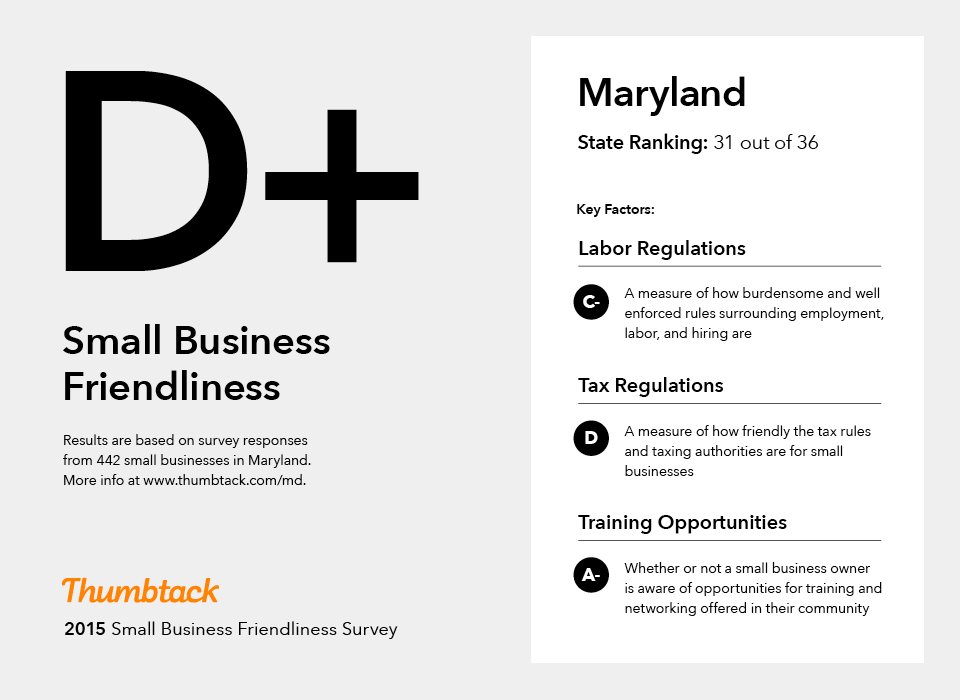
Now that I’ve managed to get a breath in after that first paragraph, allow me to decipher what this really means: it was a direct hit to the O’Malley 2016 battleship. Obviously, the Change Maryland piece making it to CNBC – which, coincidentally, today put out their annual ranking of the top business-friendly states where Maryland only ranked 31st (a decline of 2 spots from last year) – had to be interpreted as a shot across the bow by O’Malley and Maryland Democrats. That’s why they had to make sure to paint Change Maryland as a “partisan organization.”

Yet it’s no surprise that Virginia and North Carolina, two states that Change Maryland highlighted as recipients of Maryland’s tax base loss, ranked #3 and #4 respectively in the CNBC survey. (Texas and Utah were first and second, while North Dakota rounded out the top 5. I also found it telling that right-to-work states comprised the top 7 in the rankings, 9 of the top 10, and 14 of the top 16; meanwhile, closed-shop states comprised the bottom 4 and 7 of the bottom 10.)

But there’s something that Governor O’Malley and his administration cannot paint over, and that’s the mounting frustration of many of Maryland’s working families who continue to see tax and fee increases to support higher and higher spending on those they see as not contributing to society, especially illegal immigrants. All around them, they see their cost of living going up with one exception: the value of their homes, which continues to plummet.

Maybe it’s not so acute in other parts of Maryland, like downtown Annapolis, but out here there’s a lot of worry. And the numbers don’t lie: on much of the Lower Shore – where good-paying jobs are hard to come by in a roaring economy, let alone the POR (Pelosi-Obama-Reid) economy we’re under now (h/t to Tom Blumer of Bizzy Blog for that acronym) – those who left Wicomico, Dorchester, and Somerset counties had higher incomes than the arrivals did. I would also bet that if the northeastern quadrant of Worcester County (Ocean City, Berlin, and Ocean Pines) were excluded that county’s numbers would be similar.

My fellow Salisbury blogger Julie Brewington took less than 3 minutes while driving back from Ocean City to explain the quandary many thousands of not-so-Free Staters find themselves in. She well represents the producers of this economy:

I would guess that she and her husband, if they left, would tilt the income scale of the outgoing a little bit upward from the $37,000 or so figure that I gleaned for Wicomico County from the Change Maryland study. And it’s not just that, as her family has fairly deep roots in the area.

But if people don’t feel economically welcomed to a place, they will leave. Of course, that’s only my opinion but it seems to be an option more and more of those private-sector job creators in Maryland seem to be considering, to the detriment of those of the rest of us who choose to stay and fight. Who can blame them, though?

Share

Shocker: capital leaves a high-tax state

I would have argued for a release which wasn’t on a holiday week – a point I made to spokesman Jim Pettit – but on Tuesday Change Maryland released a fascinating study about the migration of capital from Maryland to other states; a study which also looked at the effect on each of Maryland’s 23 counties and Baltimore City.

In the release, Change Maryland Chair Larry Hogan is quoted as saying:

A growing tax base is the ultimate win/win situation in public policy. It eases the pressure to raise revenues, and conversely, a shrinking tax base often leads to a troublesome tax-and-spend downward spiral as actual revenues fail to meet estimates.

Welcome to Maryland, huh? How many gimmicks has the state tried over the last half-decade or so to address a yawning structural deficit? We were told the tax hikes in 2007 would do the trick, but if that wasn’t the case we would be rolling in dough from all the casinos we would build to keep those Free Staters wagering at home instead of traveling to Delaware or West Virginia to play those one-armed bandits. And so on, and so forth – meanwhile, the state continues to increase spending at a rapid clip, daring revenues to try and keep up in a losing race. The Change Maryland group also has a handy list of the 24 tax and fee increases we have endured since Martin O’Malley came into office inheriting a budget surplus in 2007.

So when I received a preview of this study on Monday, the first thing I naturally gravitated to was how it affected my home county of Wicomico, which has had its own budgetary struggles over the last couple years. Those of the liberal persuasion – a number which includes our County Executive, Rick Pollitt – blame a voter-imposed revenue cap for part of the problem, but a larger issue is the rapid decline of property values that, through property taxes, make up a significant portion of county revenues.

Whatever the reason, the Change Maryland numbers show a stark difference between Wicomico and neighboring counties on the lower Eastern Shore. Using the factors of those coming and leaving, our overall income tax base declined 0.77% while each of the three surrounding counties (Dorchester, Somerset, Worcester) increased at 0.47%, 0.16%, and 2.07% respectively. Worcester’s gain was the largest in the state, with Kent County on the Upper Eastern Shore second at 1.55%.

While the Change Maryland analysis focuses on larger counties, Hogan also had encouraging words for the rural parts of the state:

I’m very encouraged by how well we’re doing in the rural and outlying counties. These small economic engines are powering the state forward by attracting new residents.   Clearly where we need to see improvement is in our largest jurisdictions.  Baltimore City is losing its tax base at unacceptable levels and Montgomery County’s stagnant tax base will further tarnish its business reputation as elected officials seek more revenue to make up for budget shortfalls.

Yet there are three exceptions to that rural/urban rule, as Allegany County in the western panhandle lost quite a bit of its tax base as did Caroline County (also on the Eastern Shore.)

I think the problem can easily be addressed for Allegany County by allowing the extraction of natural gas from the Marcellus Shale which lies underneath; meanwhile, Caroline County is such a small number to almost be an anomaly. However, Caroline is a very rural (and landlocked) county lying somewhat off the beaten path and attracting jobs and residents can be difficult in those cases.

On the other hand, the obvious point Change Maryland is making about the lack of encouragement to business growth is most reinforced by the tax base declines in Baltimore City and County along with the close Washington D.C. suburbs of Montgomery and Prince George’s counties. Their tax base may be shrinking, but combined these entities make up about 60% of Maryland’s roughly 5.8 million residents.

So that leaves poor old Wicomico County, which is flailing just like the big boys. But why?

The liberal and Pollitt argument would go something like this: because our budgets were made artificially tight by the revenue cap, we couldn’t “invest” in quality-of-life aspects of government like education and recreation to attract people to live here. But the key attraction to an area to businesses is generally how receptive the location will be for the bottom line – even though Perdue is located in Wicomico County many of its workers choose to live in other areas for various reasons, whether lower property taxes, better housing or schools, or just liking a place to live enough to make the extra commute worth it.

If you look at the actual Wicomico County numbers, it’s interesting to see that the number of filers declined by just 45, out of a total of over 2,000 on each side – it’s not a statistically significant change. But add in the dependents and the number swells to an outflow of 215. It’s a suggestion that families with kids are leaving the area; naturally those on the Left would quickly indict the lack of spending on schools and quality of life as a culprit.

But the income difference is stark enough to suggest that it’s truly a lack of good job opportunities that is costing Wicomico County – there’s about a $5,000 income differential between those leaving and those coming in. In other words, good-paying jobs are being lost and replaced by ones which aren’t as lucrative. It’s one thing that I wish Change Maryland had included, but instead I did the simple math.

The first number in these upcoming series is the income (in thousands) per filer coming into each county and Baltimore City. The second number is the income (in thousands) shown from outgoing filers, with the third plus-or-minus number being the difference between the two:

  • Allegany: 31.48, 37.73, (-6.25)
  • Anne Arundel: 51.74, 53.22, (-1.48)
  • Baltimore City: 37.81, 43.83, (-6.02)
  • Baltimore County: 42.44, 46.28, (-3.84)
  • Calvert: 57.61, 53.71, +3.90
  • Caroline: 35.12, 31.22, +3.90
  • Carroll: 55.14, 47.76, +7.38
  • Cecil: 45.86, 45.53, +0.33
  • Charles: 48.52, 48.89, (-0.37)
  • Dorchester: 34.13, 35.40, (-1.27)
  • Frederick: 53.55, 50.64, +2.91
  • Garrett: 48.45, 32.48, +15.97
  • Harford: 52.17, 48.51, +3.66
  • Howard: 61.39, 59.05, +2.34
  • Kent: 48.79, 36.24, +12.55
  • Montgomery: 58.62, 59.00, (-0.38)
  • Prince George’s: 40.18, 40.85, (-0.67)
  • Queen Anne’s: 58.41, 49.64, +8.77
  • St. Mary’s: 50.51, 49.36, +1.15
  • Somerset: 26.74, 27.00, (-0.26)
  • Talbot: 53.00, 46.96, +6.04
  • Washington: 39.12, 38.59, +0.53
  • Wicomico: 31.44, 36.88, (-5.44)
  • Worcester: 49.67, 34.53, +15.14

Looking at the numbers through this lens, you can see that Wicomico is right there with Baltimore City and Allegany County in bleeding good-paying jobs and attracting what might be considered the working poor. Oddly enough, both Wicomico and Allegany border the two best performers on this particular comparison as both Garrett and Worcester counties are attracting new and much more affluent tax filers.

My theory on this stark differential is that these wealthier newcomers are retirees who wish to live out their years by the beach or up in the mountains, not necessarily those drawn because of good-paying jobs. A combination of retirees and people who wish to live in more rural areas, perceiving a better quality of life there, and don’t mind a long daily commute might explain the success of Eastern Shore counties like Kent, Queen Anne’s, Talbot, and perhaps even Caroline.

And then there’s the group that simply threw up their hands and moved out of the state entirely. The Change Maryland study points out Virginia was a major beneficiary of Maryland’s losses, which makes sense considering those who work in Washington D.C. can just as readily commute from Virginia as they can from Maryland. Dan Bongino – who’s familiar with working in Washington as a former Secret Service agent protecting the President –  has mentioned the fact that many considered him “crazy” for selecting Maryland over Virginia when he moved here from New York (because of the tax burden) on the campaign trail. But “I saw Maryland first and I fell in love with it,” said Dan.

Unfortunately, there are too many other pragmatic thinkers who may love Maryland but are deciding to vote with their feet and depart for greener financial pastures. It will be the job of those like Hogan and Bongino to shake up the state and place it back in a positive direction for job growth by encouraging business investment instead of considering wealthy people cash cows to milk until these producers crumple over from exhaustion.

Share

Odd and ends number 45

Thanks to Dan Bongino, who I spoke to the other night at our Lincoln Day Dinner. As he reminded me, I am now on number 45 in this occasional series of short items I grace with a paragraph or three.

So how about I start with an item involving him?

You probably don’t know the name Mia Love, but perhaps you should. The Utah Congressional candidate endorsed Dan with this statement:

“I first learned about Dan when he was being covered for a segment on Fox News.  I was amazed by his story and the passion he has for the state of Maryland,” said Mia Love.  “If we are going to change the way Washington operates, we need to start by electing folks like Dan Bongino.”

So I’m sure you’re thinking, well, that’s nice. But take a look at her website and read this piece of her life she shares therein:

On the day of Mia’s college orientation, her father said something to her that would become the ethos for her life:

“Mia, your mother and I never took a handout. You will not be a burden to society. You will give back.”

Consider that she’s born of Haitian parents and is a minority conservative Republican with a sound track record in her home state, and the strategy of this endorsement makes much more sense.

But there’s other endorsement news out there as well. This particular one shakes up the Sixth District race a bit, as former Senatorial hopeful Jim Rutledge eschewed endorsing one of the better-known candidates in the race and instead backs the underdog Robert Coblentz, calling him “a concrete conservative who understands the core principles and values that make America great.”

Perhaps that’s not a complete surprise, though, as Coblentz was the coordinator of Jim’s campaign in Washington County in 2010. Still, it gives him a little bit of gravitas in his uphill battle against more well-known candidates, and politicians have to start somewhere.

Returning to the Senate race, candidate Rich Douglas has been scoring media points with a couple appearances over in western Maryland. He called out Ben Cardin for not taking a stance on the gas tax during Alex Mooney’s WFMD-AM radio show Sunday evening, saying “I haven’t heard a peep from Ben Cardin (on the gas tax). There’s one simple way he can make his position known – go to a microphone and say what it is.” It also gave Mooney a free shot at Rob “Gas Tax” Garagiola, who’s changed his stance on the issue since he decided to run for Congress in the Sixth District. “These politicians all look out for each other,” added Douglas.

Rich was also featured in a Cumberland Times-News story by Matthew Bieniek on Friday where he echoed some of his job creation arguments presented Saturday at our Lincoln Day Dinner:

Job growth is Douglas’ priority and he doesn’t think the current administration in Washington, and U.S. Sen. Ben Cardin, are doing enough to bring new jobs to Maryland and the nation.

“The unfavorable business climate is a major factor. … Congress has a duty to remove obstacles to success,” Douglas said. A senator should be out there promoting Maryland as a business destination, he said.

A strategic, comprehensive vision for the nation’s economic future is needed, he said. The current “salami slice approach” isn’t working, Douglas said.

Obviously Douglas is covering the state quite well, and the strategy of using local media may pay off come April.

Read more

Share

Next Page »

  • Support my advertisers!

  • Only the competition hates him.
  • Kindle

  • May 2013
    S M T W T F S
    « Apr    
     1234
    567891011
    12131415161718
    19202122232425
    262728293031  
  • Advertise with monoblogue and you’ll reach a lot of people!

    Freedom fighters and TEA partiers in Maryland and beyond are discovering monoblogue!

    Click on the photo for details.

  • I haven't. Have you?
  • Part of the Politics in Stereo network.
  • Link to Maryland Democratic Party

    In the interest of being fair and balanced, I provide this service to readers. But before you click on the picture below, just remember their message:

  • Featured Advertiser

  • Categories

  • Locals flock to monoblogue

    More and more locals come here for 'News and views from Maryland's Eastern Shore.'

    Click on the photo for details on advertising opportunities.

  • Archives